


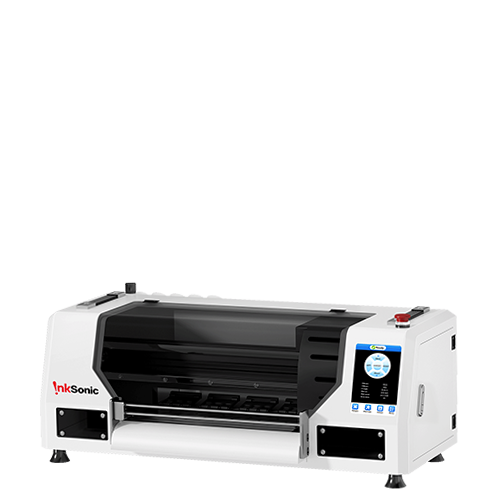


If you need a printer for metal, start with the product and how the graphic will be added. A UV flatbed printer can print full-color graphics directly on flat metal sheets and panels, while sublimation is better suited to polymer-coated aluminum photo panels. A wide format printer produces printed vinyl that is applied later, and UV DTF is better suited to smaller or irregular metal products. If you are looking specifically for a printer that prints on metal, a UV flatbed is usually the first option to consider for flat products.
This article is about printing graphics on metal surfaces, not 3D printing metal parts. In practice, the key choice is whether you want to print directly on the metal, transfer an image to a coated panel, or apply a separate graphic afterward.
Which Printer Do You Need for Different Metal Products?
Product |
Best-Fit Printing Method |
Why |
Aluminum signs |
UV flatbed |
Direct full-color printing |
Equipment ID plates |
UV flatbed / industrial marking |
Text, logos, variable information |
Warning & safety signs |
UV / vinyl / industrial marking |
Depends on durability requirements |
Metal logo plaques |
UV flatbed |
Full color + white ink |
House number plates |
UV flatbed |
Direct personalization |
Decorative metal signs |
UV flatbed |
Artwork / full-color graphics |
Metal photo panels |
Sublimation |
Coated photographic aluminum |
Reflective aluminum signs |
Printed vinyl workflow |
Reflective vinyl applied to metal |
Tumblers / irregular metal products |
UV DTF or suitable object printer |
Transfer works on non-flat objects |
Industrial identification and safety signage can be a different category from decorative sign work. If a product must tolerate abrasion, chemicals, harsh outdoor exposure, or specific regulatory requirements, engraving, laser marking, screen printing, anodizing, or another industrial process may be more appropriate than standard decorative UV printing.
What Type of Printer Can Print on Metal?
UV Flatbed Printers for Direct Printing on Metal
For flat signs, panels, plaques, and plates, a UV flatbed printer is usually the first machine to consider. The metal sits on the printer bed, UV-curable ink is jetted onto the surface, and the image is cured during the print. That makes direct printing on metal a much shorter workflow than printing a separate transfer or mounting vinyl afterward.
This setup can be used with aluminum, aluminum composite material (ACM), stainless steel, and compatible coated or painted metal panels. ACM signs are a common example. The actual surface matters more than the base metal alone, so adhesion should always be tested before production.
A UV printer for metal can handle CMYK graphics, small text, logos, serial numbers, and other variable data without transfer paper. For shops producing metal ID plates, equipment ID plates, house number plates, or metal logo plaques, that makes personalization straightforward because each panel can carry different text or graphics.
When comparing a metal printing machine, look first at usable bed size, media thickness clearance, and how the printer holds flat sheets in place. A machine used for compact plates does not need the same bed area as a printer for metal signs built around large outdoor panels. Optional clear varnish can add selective gloss or texture on compatible systems, but it is not essential for basic sign production.
White Ink on Metal
White ink is especially useful on dark, colored, or metallic surfaces. Printing CMYK directly onto brushed aluminum or another reflective finish lets some of the metal show through, which can be a deliberate effect. Adding a white underbase makes the colors more opaque and saturated.
You can also use selective white ink, leaving parts of anodized aluminum or brushed aluminum exposed while printing opaque color in other areas. That gives a direct to metal printer more creative range than a CMYK-only setup, particularly for logos, plaques, and premium signage.
Sublimation Printers for Coated Aluminum
For the metal photo products most shops encounter, sublimation is typically used with sublimation-ready coated aluminum panels. The standard workflow is: sublimation printer → transfer paper → polymer-coated aluminum → heat press.
During dye sublimation on metal, the printed dye is transferred into the coating under heat and pressure. This is why sublimation is such a common choice for metal photo panels, artwork, awards, and decorative photo products: the process is built around a coated surface designed to receive the image.
It is not a substitute for a printer for aluminum signs when you need direct printing on ordinary sheet metal. If the panel does not have the correct sublimation coating, the workflow changes completely.
Printed Vinyl for Metal Signs
A vinyl workflow is another practical way to make metal signage. A wide format printer produces printed vinyl, which can then be laminated, contour cut, and applied to the metal panel.
This works well for outdoor metal signs, reflective aluminum signage, and sign shops that already produce banners, decals, wraps, or window graphics. It adds an application step, but the same printer can serve a much wider product mix than a dedicated flatbed.
For some warning signs and safety signs, the graphics may be printed onto a specialized vinyl or reflective film and then mounted to the panel. The required material should be chosen around the environment and any relevant durability or compliance requirements.
Short Note:
For smaller or irregular metal products, UV DTF on metal offers another route. The image is printed onto transfer film first and then applied to the finished surface, so it is not the same as direct UV printing. A3 UV DTF systems such as the InkSonic VF13 are better positioned for smaller customized metal objects and transferred graphics than for full-size aluminum sign panels.
What Metal Surfaces Can a UV Printer Print On?
Aluminum and Aluminum Composite
Aluminum is one of the most common materials used for signs, but not every aluminum surface behaves the same way. Coated aluminum, anodized aluminum, brushed aluminum, and aluminum composite material all have different finishes, and those finishes can change ink adhesion and appearance.
UV printing on aluminum works best when the surface is clean, stable, and compatible with the ink system. If you are choosing a printer for aluminum, test it with the exact material and finish you plan to use. The same applies to any aluminum sign printer: a generic sample labeled only as 'aluminum' may not behave like your production stock.
Stainless Steel
Stainless steel can also be printed, but smooth or highly polished surfaces can make adhesion more demanding. Direct UV printing may work well after proper preparation, yet a quick adhesion test is more useful than assuming the ink will behave the same way it does on coated sheet metal.
Painted and Powder-Coated Metal
With painted metal and powder-coated metal, the coating is the surface the ink actually contacts. Two panels made from the same base metal can print very differently if their coatings have different gloss levels, chemistry, or surface energy.
That is why the printer specification alone cannot tell you whether a job will hold up. Test the real finish before committing to a production run.
Brass, Copper, and Other Metals
Other metals can also be printable, but the finish becomes even more important. Raw, polished, oxidized, lacquered, or coated surfaces may all require different preparation. For one-off decorative metal signs, testing a sample is usually faster and safer than treating every metal as interchangeable.
Surface Preparation and Adhesion
Good adhesion starts before the file reaches the RIP. Remove any protective film, then clean away dust, oil, fingerprints, and handling residue. Check whether the surface is raw, coated, painted, anodized, or powder-coated before deciding how to proceed.
Some surfaces may need a metal primer or adhesion promoter, while others may print well without one. There is no universal primer recipe for every UV printing on metal job, so follow the ink, printer, and substrate supplier guidance and run an adhesion test on the actual material.
How to Choose a Printer for Metal Signs
Factor |
What to Consider |
Product type |
Signs, plates, photos, irregular objects |
Product size |
Required printable / flatbed area |
Metal finish |
Ink adhesion and preparation |
Dark / metallic surfaces |
White ink |
Media thickness |
Printer clearance |
Outdoor use |
Durability requirements |
Small text / QR codes |
Detail and repeatability |
Production volume |
Speed and workflow efficiency |
Surface preparation |
Whether your main substrates need cleaning, primer, or adhesion testing |
Start with the finished product. A printer for small ID plates does not need the same bed size or production workflow as one used for large outdoor aluminum signs. If most of your work is compact personalization, a smaller flatbed may be enough; larger panels immediately push the decision toward a larger flatbed.
The metal finish comes next. A printer that performs well on coated aluminum may need different preparation on stainless steel or powder-coated stock. If you plan to offer several finishes, build sample testing into the buying process rather than treating adhesion as a fixed printer feature.
For dark or metallic materials, white ink gives you more control over opacity and color. Media thickness matters for plaques, dimensional panels, or pre-fabricated blanks, while fine text, QR codes, and variable data place more emphasis on detail and repeatability.
Production volume affects the rest of the setup. A metal sign printer used for occasional custom jobs has different speed and handling requirements from a system running batches of outdoor panels every day. The right machine is the one that fits the work you repeat, not the largest specification on the brochure.
UV Printing vs Sublimation vs Vinyl for Metal
|
UV Flatbed |
Sublimation |
Printed Vinyl |
Direct print on metal |
Yes |
No |
No |
|
Surface / Material Requirement |
Compatible surface; pretreatment may be needed |
Sublimation-ready polymer coating |
Suitable vinyl + clean application surface |
Full color |
Yes |
Yes |
Yes |
White ink |
Often available |
No equivalent |
Workflow-dependent |
Best for |
Signs, plates, plaques |
Photo panels |
Sign graphics |
Heat press |
No |
Yes |
No |
Main advantage |
Direct-to-surface |
Photographic coated panels |
Flexible sign-shop workflow |
The choice is easier when you match the process to the finished product. Direct full-color signs and plaques point to a UV flatbed printer. Coated photo panels point to sublimation. Applied sign graphics point to vinyl. For smaller or irregular objects that need transferred graphics, UV DTF on metal makes more sense.
None of these methods is universally better. They solve different production problems, and a full-service shop may eventually use more than one.
Frequently Asked Questions
Can a UV printer print on aluminum?
Yes. UV printing on aluminum is widely used for signs, plaques, and decorative panels, but the result depends on the actual finish. Coated, anodized, brushed, and painted aluminum can all behave differently, so test the exact material before running a larger job.
Does metal need to be coated before UV printing?
Not always. Some compatible metal finishes accept UV-curable ink directly, while others benefit from cleaning, a metal primer, or an adhesion promoter. The correct preparation depends on the surface rather than the word 'metal' alone.
Can you sublimate on metal?
Yes, but standard dye sublimation on metal requires a compatible polymer-coated surface. You print the design onto transfer paper and use a heat press to move the image into the coating. Raw, uncoated metal is not suitable for the standard sublimation workflow.
Can a regular inkjet printer print on metal?
A normal desktop inkjet is not designed to feed rigid metal panels or cure ink on their surfaces. For commercial work, you would typically use a UV flatbed, sublimation workflow, printed-vinyl workflow, or another process designed for the product and material.


