




Custom T-shirts are more than just clothes—they are a means for self-expression, a marketing tool for small businesses, and a potential source of income. All of this is made possible with various printing options that now exist. We don't live in a world where you need to find a factory to create shirts of professional quality. And when armed with the right tools and systems, you can whip up colorful designs at home that are bright, shiny and long lasting.
Certainly there are many ways to make your own shirts! Iron-on transfer, vinyl-cutting, or fabric paint options are just some. Ironically, none of these options have the same quality, flexibility, and prices of DTF (direct-to-film) printing. If making custom shirts is going to be business for you, consider the following reasons why DTF printers should be your #1 consideration.
How to Make a Custom Shirt
Perhaps the most fulfilling DIY project you can do is creating a personalized shirt. It's where function meets art—you're not just designing on a screen, you're creating something that you can wear or give away. Your concept is the starting point. It might be a clever catchphrase, a logo for a family reunion or something that you scribbled yourself. Your design is the shirt’s identity, so it has to be something you’d be proud to show off.
Once you have your design, it is time to get it done. You could set up a job at the print shop, or take advantage of your at-home T-shirt printing and DTF printers to do it yourself. DTF is a breeze and unlike older technology that can be cumbersome or limited. It's pretty forgiving, and you can make it whatever you want, including several colors, or print on shirt styles you’ve never tried before, or different material blends, without a worry about functionality!
Other At-Home Shirt Printing Methods
Of course, DTF isn’t the only option out there. Many people start their T-shirt journey with more traditional methods. Here’s a look at how they compare:
- Iron-On Transfers —Folks like them since they're cheap and easy to put on. But the designs don’t have much staying power. You’ll begin to notice fading, cracking or peeling after two washes.

- Heat Transfer Vinyl (HTV) —Perfect for blocky, bold designs such as names or numbers but very bad at created detailed lines or smooth gradients. You're also limited in how many colors that you can stack.

- Screen Printing — A classic method that provides durable outcomes. It does require screens, ink, and space to work—so it's more suitable for big orders instead of small, creative orders at home.

- DTG (Direct-to-Garment) Printing —Provides excellent quality but at a premium price. The equipment is costly, and it typically requires pre-treated garments to work properly.

- Fabric Paint or Embroidery — It's fun to create and highly customize projects, but it's time-consuming if you need multiple shirts, machines for professional embroidery are very expensive, and if sewn by hand, it's very time-consuming and unrepeatable.

While all of these methods have their uses, DTF most harmoniously balances them. It gives you pro-level prints, can be used with nearly any material, and does not require enormous start-up capital. Hobbyists and aspiring entrepreneurs alike find it the most convenient means of creating custom t-shirts at home.
Why Choose DTF Printing for Home Use
Vibrant Colors & Sharp Detail
Dark fabrics are no problem with DTF. Because of the white underbase, even the brightest yellows and softest pastels appear incredible against black cotton. This process also can reproduce gradients and clean, fine lines, so you have clean and professional looking designs.
Works on Almost Any Fabric
DTF transfers can be applied to surfaces made of cotton, polyester, blends, and more, unlike sublimation (which is confined to polyester). This means you can print DTF transfer prints to t-shirts, hoodies, tote bags, and all sorts of apparel and not need to worry about what material you are using.
Built to Last
When DTF prints are done correctly, they are not going to crack, peel, or fade after multiple washes. This makes them suitable for personal use and fair dealing.
Affordable and Scalable
No more worrying about expensive screens and minimum quantity orders - DTF lets you print one shirt or 50 shirts as easily as possible. It makes it perfect for printing sample designs, short runs, or one-offs.
What Do I Need to Make T-Shirts at Home?
Many first-timers ask: What do I need to make T-shirts at home? This is a simple checklist:
DTF Printer
PET Transfer Film to print your designs
DTF Inks
Hot Melt Adhesive Powder to bond the print to fabric
Heat Press Machine for transferring designs
Design Software (Photoshop, Illustrator, or Canva)
Basic Cleaning Supplies to keep your printer in top shape
With these essentials, you’re fully equipped to make a self-made shirt that looks just as good as something bought in a store.
How to Print T-Shirts at Home with a DTF Printer
Here’s a basic outline of how that works, and what it looks like in practice.
-
Prepare Your Artwork
Design your box in Photoshop, Illustrator, or something like Canva.
Be sure the resolution is high (300 dpi preferred).
-
Print the Transfer
Use your printer to print the design onto PET film, with a white underbase for dark shirts.
-
Apply Adhesive Powder
Sprinkle hot melt powder onto the print while the ink is still wet, then shake off the excess.
Cure the powder using a heat press or curing oven.
-
Transfer to Fabric
Position the film on your shirt.
Press with a heat press at the recommended temperature and pressure.
-
Peel & Finish
Once cooled (cold peel), remove the film.
Do a final press for a smooth, long-lasting finish.
Choosing the best DTF printer to use at home
Not all printers are created equal. For home users, you’ll want a machine that balances affordability, quality, and ease of maintenance.
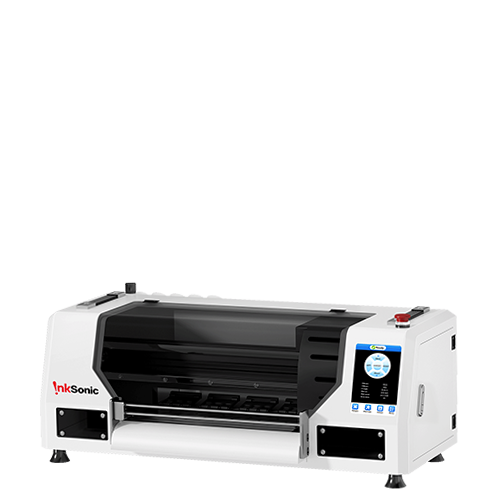
An excellent choice is the InkSonic XP600. It's simple enough for newcomers but strong enough to give professional-quality output, producing bright, durable prints every time you use it. If you're just starting to discover custom shirt-making—or even dabble in a small business—the InkSonic XP600 gives you the dependability you need without tying your hands up in knots.

Tips for Success in DTF Printing
Test First:Test print prior to end production always.
Use High-Quality Supplies: High-quality inks, powders, and PET films do matter.
Keep Your Printer Clean: Clean often to ensure consistency.
Store Transfers Properly:Store flat, cool, and dry to preserve adhesive quality.
Bring Your Designs to Life with DTF
Home T-shirt printing is a do-it-yourself hobby—but it is simple to turn it into a side business or even a full-time income. With DTF printing, you are able to print high-quality shirts without spending thousands of dollars on commercial equipment. The low unit cost and the ease at which one-offs can be done make it perfect for small orders, Etsy shops, or small events. If you’ve been dreaming of turning creativity into income, starting with a DTF printer is a smart first step.
For the fastest, most adaptable and most affordable method of printing customized tees at home, DTF is the solution. If you want to create personalized gifts, practice some creativity or start a mini fashion business, a DTF printer brings professional quality printing to your fingertips.
Get started now. The InkSonic XP600 is perfect for home users who want bright, long-lasting, professional-quality results with little or no learning curve. Installed correctly, your own T-shirts won't simply print well—they'll last.
Try the InkSonic XP600 today and start producing shop-quality T-shirts at home.
FAQs
Can beginners use a DTF printer at home?
Yes! Modern DTF printers like the InkSonic XP600 are designed with ease of use in mind.
How much does it cost to print a shirt with DTF?
Depending on size and design, usually $1–$3 per shirt in materials—much cheaper than outsourcing.
Is DTF better than HTV or screen printing?
For small batches and detailed, colorful designs, yes. DTF combines the best of both worlds without the limitations.
What’s the best fabric for DTF printing?
Cotton and poly blends work perfectly, but almost any fabric is compatible.
Can I start a business with a home?
Absolutely. Many small print shops begin with a single DTF printer at home.


