









Summer is often the most profitable season of the year for custom T-shirt printing businesses. It is also the season that puts the most pressure on daily operations. The obvious change is order volume. But that usually is not the part that creates problems.
The bigger shift is speed. Customers expect shorter turnaround times, deadlines start overlapping, and production schedules become much less forgiving. For many shops, the difference between a smooth summer and a stressful one has very little to do with how many orders come in. It usually comes down to preparation.
A busy season rarely falls apart because of one major mistake. More often, it is several smaller issues showing up at the same time — missing inventory, delayed approvals, slower production, or workflows that worked perfectly fine during quieter months but start struggling under pressure.
This guide breaks down what changes during summer and what should be ready before the first wave of orders starts arriving.
Why Summer Demand Increases
Seasonal Events Increase Group Orders
Summer naturally brings more group activities, and that changes the way custom apparel orders come in. Summer camps, school programs, sports teams, family reunions, local events, and community activities all tend to create larger group orders.
Unlike individual customer requests, these jobs usually revolve around a fixed date. Missing a deadline often means missing the event itself. The challenge is not only the larger order size. It is also the way those orders arrive.
During slower periods, work usually comes in at a manageable pace. Summer often feels different. A camp order may land on Monday morning, a local softball team may need uniforms before Thursday, and a family reunion customer might suddenly update quantities right before production begins. That is where the pressure starts building.
Demand Is Driven by Fixed Summer Events
Summer demand does not simply increase. It becomes concentrated. Memorial Day promotions, graduation season, summer camp schedules, July 4th events, and local sports tournaments often happen within a relatively short period of time.
Each event by itself is usually manageable. The challenge begins when several of them overlap.
Once that happens, demand is no longer the biggest issue. Capacity becomes the real limitation.
For many shops, summer problems are not caused by having more work. They happen because too much work shows up at exactly the same time.

What You Need to Do Before Summer
Preparation is usually where summer seasons are won or lost. Summer does not reward businesses that react quickly. It rewards businesses that already have systems in place before things become busy.
Check If Your Production Setup Can Handle Peak Load
Before summer begins, it is worth looking at your setup under realistic pressure rather than ideal conditions. Most equipment performs well during normal weeks. Summer is different. The real question is not whether your equipment can produce good results.
The question is whether it can maintain those results when the machine is running through back-to-back jobs for several days in a row. If your setup already feels close to its limit during a normal production day, summer will expose that weakness quickly.
An older heat press that occasionally needs adjustment, a printer that starts drifting after long print runs, or a workflow that depends on one person handling multiple tasks at the same time may not create obvious problems during spring. By July, those same issues can slow down an entire operation.
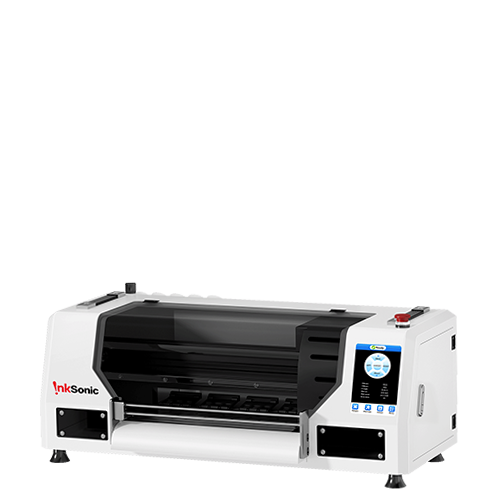
For shops already noticing production becoming a bottleneck, peak season is often the point where upgrading equipment becomes less of a luxury and more of a practical decision. The InkSonic U13D dual XP600 printer features a dual-printhead system, which improves overall output efficiency by increasing single-job printing speed. This allows more prints to be completed within the same production window, making it a strong fit for higher-volume environments where maintaining consistent speed and stability becomes critical during busy seasons.
A useful question to ask yourself is simple:
If something fails during your busiest week, do you already know what it will be?
If the answer is no, it may be worth taking a closer look before summer arrives.

Prepare Your Summer Design Library in Advance
One of the biggest hidden delays during summer usually has nothing to do with printing itself. It often happens during design approval. As order volume increases, customers still expect quick responses and fast mockups.
If every request starts with a completely blank canvas, the bottleneck can move from production to communication surprisingly quickly. Instead of building every design from scratch, focus on creating reusable design structures. Many summer jobs follow similar patterns even when the customers themselves are completely different.
Camp orders often work well with badge-style layouts and curved typography. Sports-related jobs usually rely on bold numbers, varsity lettering, and team-focused compositions. Family reunion designs tend to be cleaner and more text-driven, with more emphasis on names, locations, and dates. Beach and vacation themes often use brighter seasonal colors, sunset elements, and more relaxed typography styles.
Preparing these structures ahead of time does more than save design time. It removes friction from the approval process, which is often where orders get delayed before production even begins.
Secure Consumables and Blank Inventory Early
Inventory problems are probably the easiest summer issue to prevent. DTF film, white ink, adhesive powder, and blank apparel all seem easy to reorder — until several large jobs suddenly depend on the same materials at once.
Summer orders usually arrive in clusters, and inventory disappears faster than many businesses expect. The first items that become difficult are rarely specialty products. They are usually the products used every single day:
- Core T-shirt sizes such as M–XL
- Basic colors such as black, white, and navy
- High-volume consumables such as white ink and DTF film
Many shops also prefer securing their most frequently used blank apparel inventory before summer starts rather than waiting for demand to build. Core sizes and colors often disappear much faster during peak season than people expect.
Some businesses also prefer sourcing their consumables through one supplier simply because it removes extra purchasing steps once schedules become busy. Having materials such as white ink, DTF film, and blank T-shirts ready before the rush starts can make production much easier to manage once multiple orders begin arriving together.
The mistake many businesses make is treating summer inventory the same way they manage inventory during slower months.
If supplies run out on Wednesday while several jobs are due on Friday, placing an order at that point usually does not solve the problem. Summer preparation means creating a buffer before you actually need it.

Conclusion
The businesses that handle summer successfully are rarely the ones reacting the fastest once things become busy. They are usually the businesses that dealt with predictable problems before the season started.
Most production problems during summer do not come from having too many orders. They come from overlapping deadlines, missing materials, delayed approvals, and workflows that simply were not built for sustained pressure.
Summer rewards preparation much more than last-minute effort. If you have not checked your production capacity, prepared reusable design structures, or secured inventory for your most-used materials, now is usually the best time to do it.
Once July arrives, there is often very little time left to fix problems that could have been prevented weeks earlier. That difference is what separates a summer season that feels controlled from one that constantly feels like catching up.


