


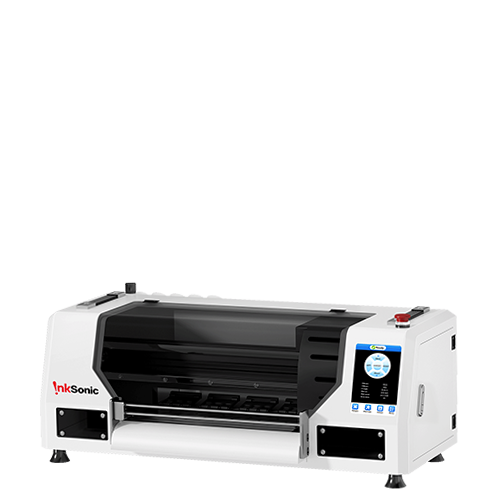





DTF printing at home is practical for personal projects, Etsy and Shopify sellers, local event orders, and small apparel businesses that need flexible, short-run production. But a home DTF printer is not a plug-and-play desktop inkjet. A complete DTF printer setup at home requires DTF ink, PET film, adhesive powder, RIP software, curing, a heat press, ventilation, and regular maintenance. The right home DTF printer also needs to match your available space, order volume, production speed, and maintenance tolerance.
Can You Use a DTF Printer at Home?
Yes, you can use a home DTF printer if you have stable workspace, ventilation, enough electrical and table capacity for heating equipment, and a routine for white ink care. Treat it as small production equipment rather than an appliance you pull out once a month.
What “Home Use” Really Means
A spare room, craft room, garage, basement, home office, or small studio can all support a home DTF setup, but the best choice is a space you can dedicate to a consistent production workflow.
Start with the environment: the printer should sit in a stable, reasonably controlled room with good ventilation and minimal dust, since large temperature or humidity swings and airborne debris can affect printing and material storage.
Then plan beyond the printer itself. You need enough clear workspace to move film from printing to powdering and curing, then to the heat press and a clean cooling/peeling area without constantly rearranging equipment. Keep blanks and consumables nearby but protected from powder and heat. If children or pets have access to the home, the production area should also be separated or secured so they cannot reach ink, adhesive powder, hot equipment, or moving printer parts.

For DTF printing at home, workflow matters more than squeezing a machine onto one desk. Odor, airborne powder, curing heat, and regular cleaning should be planned before purchase.
Who Is a Home DTF Printer Best For?
A DTF printer for small business use fits Etsy sellers, Shopify store owners, custom T-shirt side hustles, local event printers, crafters with steady demand, and small apparel brands testing designs. A DTF printer for shirts at home is especially useful when customers expect quick personalization or small-batch turnaround.
It is less suitable for someone printing only a few shirts per month, working without ventilation, or unwilling to perform maintenance. In those cases, outsourcing transfers is usually simpler.
What Is a DTF Printer and How Does It Work?
A direct to film printer for home use prints artwork onto PET transfer film with CMYK ink plus a white layer. While the print is wet, hot-melt adhesive powder is applied, the transfer is cured, and a heat press bonds it to the garment.
Basic DTF Printing Workflow
Prepare and size the design in your graphics software.
Send the artwork through RIP software with the correct color and white-layer settings.
Load PET film in the correct printable orientation; confirm it before wasting ink.
Run a nozzle check, then print CMYK plus white.
Apply powder evenly and remove loose excess.
Cure until the adhesive is properly melted, not scorched or under-cured.
Press using the film/ink supplier’s recommended time, temperature, and pressure; peel and finish as specified.
What Can You Print With DTF at Home?
DTF works on T-shirts, hoodies, tote and canvas bags, and—with the right press—some hats. It can decorate cotton, polyester, blends, and light or dark garments. That fabric flexibility and full-color capability are major reasons creators choose DTF over methods tied to narrow substrate ranges.
What You Need for a Home DTF Printing Setup
A complete setup includes more than the printer. The practical workflow should move cleanly from computer and printing to powdering, curing, pressing, cooling, and storage, while the section structure below keeps equipment, consumables, and workspace requirements clear.
Core Equipment
A home DTF setup needs more than the printer itself. At minimum, plan for the following equipment:
DTF printer for printing CMYK and white ink onto PET film
Computer with RIP software to manage artwork, color, print size, and the white underbase
Heat press to transfer the finished design onto the garment
Curing equipment such as a compact DTF oven or another manufacturer-approved curing method
Powdering area or tray to apply and contain hot-melt adhesive powder
Stable worktable or printer stand with enough clearance for film feeding and handling
Ventilation or air filtration for the printing, powdering, and curing area
Clean cooling and finishing space for peeling, inspection, and completed garments
The equipment should support a simple production flow:
Computer → Printing → Powdering → Curing → Heat Pressing → Cooling and Inspection

For a home setup, the key is not fitting every machine onto one desk. Each stage needs enough room to move film safely without contaminating wet prints, spreading adhesive powder, or repeatedly rearranging equipment.
The heat press and curing setup should also match the printer’s output. A faster printer does not improve finished-garment production if curing or pressing becomes the bottleneck. This matters especially for Etsy, Shopify, local event, or small bulk orders where several transfers may need to move through the workflow at once.
Before starting a production batch, run a nozzle check and confirm film orientation. For a new ink, film, or garment combination, test curing and pressing settings before producing customer orders. A wash test is also useful before selling a new setup commercially.
Consumables
Keep CMYK and white DTF ink, PET film, hot-melt adhesive powder, cleaning solution, nozzle-protection products specified by the manufacturer, maintenance tools, blank garments, and relevant replacement parts. White ink provides opacity on dark garments, so poor white output can make otherwise accurate colors look weak.
Workspace and Ventilation
Choose a room with stable temperature, dust control, ventilation, and enough table space to separate wet printing/powdering from clean cooling and garment handling. Keep children and pets out of the production zone. Before selling a new garment/film/ink combination, run a pressing test and a wash test. Record the settings that passed so repeat orders use the same process. For production planning, compare daily print capacity with curing capacity and heat press speed; the slowest stage determines realistic output.
Should You Buy a DTF Printer or Order DTF Transfers?
Buying makes sense when control, turnaround, and consistent volume justify equipment and maintenance. For low or irregular volume, ordering ready-to-press transfers can be cheaper and easier. This is the practical DTF transfers vs buying a DTF printer decision.
Buy a DTF Printer If
Buy when you print consistently, need same-day or short-turnaround customization, want to test designs on demand, and can maintain white ink. Etsy/Shopify sellers and local printers benefit most when frequent small orders would otherwise trigger repeated transfer shipping charges or delays.
Order DTF Transfers If
Outsource if orders are occasional, workspace or ventilation is limited, or you want to validate demand before investing. If you need only a few shirts each month, ownership usually creates more maintenance than value.
Break-Even Thinking
Use your own last 8–12 weeks of orders rather than a generic profit claim. First calculate the outsourced cost per usable transfer, including shipping. Then estimate in-house variable cost per usable transfer: ink, film, powder, cleaning materials, expected waste, and electricity. The difference is your potential saving per transfer.
For illustration only, assume an outsourced transfer costs $4.50 delivered and your estimated in-house variable cost is $1.50. Replace these numbers with your actual transfer size, supplier price, waste rate, and material costs. A $2,400 complete setup would need about 800 successful transfers to recover equipment cost ($2,400 ÷ $3). If you sell 100 transfers’ worth of garments per month, that is roughly eight months before allowing for labor, downtime, repairs, taxes, or financing. At 25 per month, it is about 32 months—often too slow to justify ownership.
For a small shop, buy only when the conservative break-even period fits your business horizon and you also value faster turnaround. Model at least 10–15% waste while learning and include maintenance time. If a local-event job needs 80 shirts tomorrow, also check whether your curing and pressing capacity can finish them on time; printer speed alone does not make the order profitable.
What Size DTF Printer Is Best for Home Use?
For most home-based apparel businesses, an A3 or 13-inch DTF printer is the most practical middle ground. It offers enough print width for common shirt graphics and small gang sheets without requiring the footprint and production infrastructure of a larger commercial system.
An A4 printer is better when space and upfront investment matter most, while a 24-inch or larger system makes sense only when order volume is high enough to justify the extra workspace, curing capacity, and finishing equipment.
Printer Size |
Best For |
Typical Use |
Main Trade-Off |
A4 |
Hobby users, very small home setups |
Small logos, sleeves, accessories |
Compact, but limited for full-size shirt graphics |
A3 / 13-inch |
Etsy/Shopify sellers, home businesses |
T-shirts, hoodies, totes, small gang sheets |
Best balance of size, flexibility, and home use |
24-inch+ |
High-volume sellers, commercial production |
Large gang sheets, bulk orders |
Faster scaling, but needs more space and supporting equipment |
A4 DTF Printer
A4 is useful when space is tight and designs are small. It is a low-risk way to test DTF, but full-front shirt graphics and production scaling quickly expose the size limit.
A3 / 13-Inch DTF Printer
A3 handles common apparel graphics, hoodies, totes, short-run orders, and useful gang-sheet layouts while remaining manageable in a home studio. For many sellers, it offers the best balance of flexibility, footprint, and cost.
Roll-Fed or 24-Inch+ DTF Printers
These systems suit high-volume production, commercial shops, gang sheet businesses, and daily bulk orders. They are usually excessive for a home office because the printer, powder shaker/dryer, media handling, ventilation, and finishing space all scale up.
How Much Does a Home DTF Printer Setup Cost?
A complete home DTF setup can vary widely in price depending on printer size, automation, and what the starter bundle includes. As of August 2026, representative U.S. desktop systems range from about $1,600 for an entry A4 printer to roughly $5,000 for more production-oriented 13-inch systems, while a practical A3 home setup with curing and a full-size heat press typically starts in the mid-$2,000s.
Cost Item |
Representative U.S. Price |
Examples |
Desktop DTF printer |
$1,599–$4,995 |
Procolored F8 A4 $1,599; InkSonic R1390 A3 $1,899; Procolored K13 Lite A3 $1,999; Prestige R1 13" about $4,995 |
A4 → A3 upgrade |
About $400+ |
Procolored F8 A4 $1,599 vs. K13 Lite A3 $1,999; actual difference depends more on printhead/features than size alone |
15" × 15" heat press |
About $399–$419 |
Procolored Panda $399; InkSonic Auto Dual 15×15 $419 |
Compact curing oven |
About $329–$400+ |
InkSonic compact oven $329; Procolored current F13 printer-to-oven bundle difference is about $400 |
Initial ink |
Often included |
InkSonic and Procolored starter printer packages include initial CMYKW ink |
PET film |
Often included; ~$89 replacement |
InkSonic R1390 includes 100m film; InkSonic 13" × 328' replacement roll $89 |
Adhesive powder |
Often included; ~$39/kg replacement |
Starter bundles typically include 500g; InkSonic replacement 1kg $39 |
RIP software |
Often included |
Included with InkSonic R1390 and Procolored F13/K13-type packages |
Maintenance supplies |
About $20–$50 initially |
Cleaning/protection liquids and basic maintenance materials; some starter bundles include them |
Complete A3 home setup |
About $2,650–$3,600 |
InkSonic R1390 + oven + full-size press ≈ $2,647; Procolored F13 Premium Complete Bundle currently $3,599 |
Ongoing consumables |
Highly volume-dependent |
Ink, film, powder, cleaning fluid, waste, parts and electricity |
Prices are representative U.S. prices checked in August 2026 and may change with promotions, bundle configurations, and availability. Compare what is included before adding printer, ink, film, powder, software, and finishing equipment as separate costs.
Printer Price
Converted printers can lower upfront cost but may require more troubleshooting. Entry-level dedicated systems and A3/13-inch home-business printers cost more but can provide a clearer support path. Do not choose on price alone; reliability and replacement-part availability affect lifetime cost.
Supplies and Equipment Beyond the Printer
Budget for white and CMYK ink, PET film, powder, cleaning liquid, maintenance tools, blanks, a heat press, curing equipment, software, ventilation, a worktable, and storage. A DTF printer starter kit may cover some of these items, but check exactly what is included.
Hidden Costs
Allow for failed prints, clogged nozzles, wasted film/powder, replacement parts, learning time, shipping, and downtime. The cheapest machine can become the most expensive setup if it repeatedly interrupts paid orders.
What Maintenance Does a Home DTF Printer Need?
DTF printer maintenance is one of the biggest differences between DTF and a normal home inkjet. Maintenance frequency varies by model, so follow the manufacturer’s guide rather than a generic schedule.
Why White Ink Needs Attention
White ink contains heavier pigment that can settle and contribute to clogs. A white ink circulation DTF printer can reduce settling risk, but circulation does not eliminate nozzle checks, cleaning, or regular use. White ink maintenance is the main reason very occasional users should think carefully before buying.
Daily and Weekly Maintenance
Typical tasks include nozzle checks, white-ink circulation or agitation as specified, cleaning the printhead/capping area when required, keeping film and powder dry, controlling dust, and printing regularly. If a nozzle check changes, correct it before starting a customer gang sheet; catching a problem on a test pattern is cheaper than losing a full sheet.
Features That Help Beginners
A DTF printer for beginners is easier to manage when it includes automatic white-ink circulation or mixing, filtration, useful cleaning functions, clear tutorials, accessible replacement parts, and responsive support. These features reduce common failure points but do not make maintenance optional.
DTF vs Sublimation, HTV, and DTG for Home Use
DTF fills the gap between craft methods and larger garment-printing systems, but the best method depends on substrate, artwork, volume, and maintenance tolerance.
DTF vs Sublimation
In a DTF printer vs sublimation comparison, DTF works on cotton, polyester, blends, and dark garments and supports a white underbase. Sublimation has a simpler no-powder workflow and is excellent for polyester and compatible hard blanks.
DTF vs HTV
For DTF printer vs heat transfer vinyl, DTF is stronger for full-color or complex graphics and avoids weeding. HTV has a lower startup cost, needs no printer maintenance, and remains efficient for simple names, numbers, and one- or two-color logos.
DTF vs DTG
DTF can batch and store transfers and works across more fabric types without garment pretreatment in many workflows. DTG prints directly onto garments and can produce a soft hand with the right system. DTF durability still depends on correct curing, pressing, and wash-tested settings.
Why InkSonic DTF Printers Fit Home Use
The best DTF printer for home use is not automatically the fastest machine. It should fit the room, match actual order volume, include a workable supply/support path, and reduce avoidable setup problems. An InkSonic DTF printer can be considered alongside outsourcing and other dedicated systems rather than as a one-size-fits-all answer.
InkSonic R1390 F13: Budget-Friendly A3 Home Setup
InkSonic R1390 F13 is the economical, practical choice for home creators, Etsy sellers, and small apparel startups that want A3+ DTF capability without paying for more performance than they need. Compared with the C13, the F13 features a more modern exterior design together with upgraded convenience and maintenance functions, including one-click white-ink circulation and an automatic cleaning mode every 12 hours. It keeps the value-focused positioning of the R1390 platform while offering a more refined and easier-to-manage experience for everyday home and small-business production.
InkSonic F1080 H13: Faster 14-Inch Home-Business Option
InkSonic F1080 H13 is the first-choice model for beginners who want both high efficiency and easy operation in one machine. The 14-inch platform and F1080 printhead deliver A3 prints in about 2–4 minutes, while white-ink circulation, mixing and filtration, smart cleaning, integrated maintenance, and holiday auto-cleaning simplify routine care.
InkSonic XP600 U13D: Higher Output for Growing Home Businesses
InkSonic XP600 U13D is better suited to sellers with consistent orders who need a faster workflow. It is less logical for a casual hobbyist whose low volume cannot justify added equipment capability.
How to Choose Among InkSonic Models
Model |
Print Width |
Print Speed* |
White Ink System |
Key Difference |
Best Fit |
R1390 F13 |
13 in |
A3: 5–8 min |
One-click white-ink circulation;Automatic cleaning mode |
Economical upgrade from C13 with a modern exterior and upgraded convenience and maintenance features |
Value-focused home creators and small-business starters |
F1080 H13 |
14 in |
A3: 2–4 min |
Circulation, mixing & filtration |
High efficiency combined with beginner-friendly automation and easy maintenance |
First-time DTF owners; beginners who want speed, ease of use, and room to grow |
XP600 U13D |
13 in |
A3: 3–5 min |
Circulation, mixing & filtration |
Dual XP600 printheads; higher throughput |
Growing shops with steady order volume |
*Print speed is the manufacturer-listed A3 print time; actual throughput also depends on artwork, RIP settings, curing, and heat-press capacity.
Choose by bottleneck, not model name. If you print only a few orders weekly, the R1390 may be easier to justify. If orders are consistent and the F1080 and XP600’s faster output is useful, first confirm that curing capacity and heat press speed can keep pace. If they cannot, spending more on printer speed will not increase finished-garment output.
Frequently Asked Questions
What is the best DTF printer for home use?
For many home sellers, a compact A3 or 13-inch machine with reliable white-ink circulation, available supplies, and strong technical support is the most balanced choice.
Can I use a DTF printer at home?
Yes, with adequate ventilation, stable workspace, curing equipment, a heat press, supplies, RIP software, and a maintenance routine.
What supplies do I need for DTF printing at home?
You need CMYK and white ink, PET film, adhesive powder, RIP software, curing equipment, a heat press, cleaning supplies, and blank garments.
Is A3 or A4 better for home DTF printing?
A4 suits hobby work and small graphics. A3 is more flexible for shirts, hoodies, totes, gang sheets, and small-business orders.
Is DTF printer maintenance difficult?
It is manageable when performed consistently. White ink, nozzle condition, cleanliness, and manufacturer-recommended routines need regular attention.
Should I buy a DTF printer or order DTF transfers?
Buy when volume is consistent, turnaround matters, and the break-even math works. Outsource when volume is low, space is limited, or you do not want printer maintenance.


