


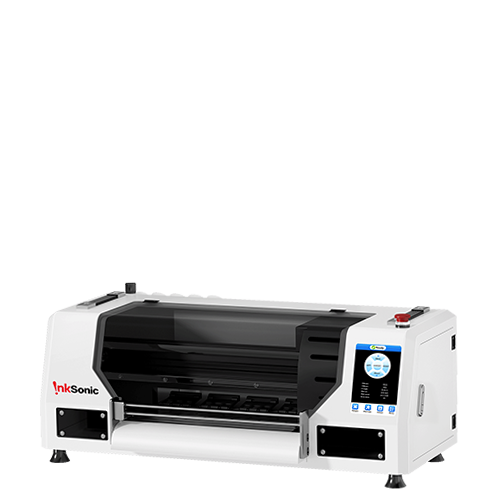





The cheapest way to start DTF printing is usually a used or converted desktop inkjet, which may cost only a few hundred dollars. Entry-level A4 DTF printers typically move closer to $700-$1,000, while practical dedicated A3 systems commonly start around $1,500-$2,000. The printer price is only one line item. You may also need RIP software, DTF ink, PET film, adhesive powder, a curing oven, a heat press, maintenance supplies, and replacement parts.
This guide compares realistic budget tiers, complete setup costs, maintenance trade-offs, conversions, and the point at which A3 DTF printer becomes worth paying for.
Cheapest DTF Options at a Glance
A low advertised price can describe a used printer, a bare printer without software, or a bundle that includes some production equipment. The ranges below show what buyers commonly encounter, not a universal DTF printer price. Prices vary by seller, condition, shipping, and promotion; used machines vary even more. Always compare the same package contents.
Budget option |
Approx. printer price |
Size |
Type |
Main trade-off |
Best for |
Used or converted Epson |
$300-$700 |
A4 or A3 |
DIY conversion |
Highest setup and maintenance burden |
Hobby use and testing |
Entry-level A4 DTF |
$700-$1,000+ |
A4 |
Compact entry level |
Small print area and lower output |
Low-budget entry |
Purpose-built compact DTF |
$1,000-$1,500 |
A4 |
Dedicated |
Costs more than DIY |
Beginners and light production |
Affordable A3 or A3+ |
$1,500-$2,000+ |
13-inch |
Dedicated desktop |
Higher upfront cost |
Regular apparel production |
Below $1,000, expect compromises in print size, automation, technical support, or maintenance. Around the A3 tier, the purchase begins to make more sense for regular apparel work because the printable width supports larger shirt graphics and more efficient gang sheets. Printer-only prices still do not equal a ready-to-run DTF printer setup cost.
What Can You Get at Different DTF Printer Budgets?
Under $500 Mostly Used or DIY
A true ready-to-run DTF printer under $500 is uncommon. At this level, buyers usually find a used Epson, a converted desktop inkjet, an aftermarket conversion kit, or a partly completed DIY white-ink system. Manual film feeding and a separately configured RIP are normal. Condition matters: a cheap chassis can still need a printhead, dampers, capping station, waste-ink parts, or tubing before it prints reliably.
This route fits a technically confident hobbyist who wants to learn with less money at risk. It is a poor match for a shop that depends on daily uptime or for anyone expecting plug-and-play production. Under $500, you are usually buying a project rather than a complete production system. Reserve part of the budget for cleaning fluid, test film, ink lost during setup, and the possibility that a used printhead cannot be recovered.
$500 to $1,000 Entry-Level A4 and Converted Printers
In the $500-$1,000 range, options expand to compact A4 systems, conversions sold as ready-to-use packages, and machines with basic white ink circulation. Some sellers include starter ink, film, or RIP software; others charge separately. This is the most realistic DTF printer under $1000 tier, but package details can change the value by hundreds of dollars.
An A4 DTF printer can handle pocket logos, youth graphics, labels, and many small front designs. Its roughly 8.3-inch paper width becomes restrictive for popular 10 to 12-inch adult shirt fronts and larger back prints. Smaller sheets also reduce gang-layout efficiency. Throughput is usually modest, hardware may be light duty, and daily care remains hands-on. For someone seeking the cheapest DTF printer for beginners, an A4 package with clear setup instructions, included RIP, domestic parts, and reachable support is often safer than a lower-priced listing with vague contents.
$1,000 to $2,000 More Practical Dedicated Systems
From $1,000 to $2,000, buyers begin to see dedicated A4, A3, and A3+ systems with better film handling, more developed white-ink circulation, scheduled or automatic cleaning, and fuller starter packages. A DTF printer under $2000 may also include a small oven, basic supplies, or a bundled heat press, although those inclusions must be verified line by line.
The main gain is workflow, not simply resolution. A 13-inch A3 DTF printer can place a large adult chest graphic without splitting it and can arrange several small designs across a wider gang sheet. Better feeding reduces skew and film waste. More accessible support can shorten downtime. These systems still require nozzle checks, agitation or circulation, humidity control, cleaning, and regular use. The cheapest purchase and the cheapest practical production setup are rarely the same. For repeated paid orders, spending toward the top of this tier can reduce labor and interruptions enough to offset the initial difference.
What Looks Cheap but May Cost More Later?
The lowest-priced DTF printer is not always the lowest-cost option. A cheaper machine may reduce the upfront investment, but additional equipment, maintenance time, failed prints, and limited support can increase the real cost over time.
Before choosing a budget DTF printer, look beyond the advertised printer price and check what is included, what you will need to add, and how much time the machine requires to keep running.
A Printer Without a Complete Workflow
Some low-cost DTF printers are sold as standalone machines, but printing transfers requires more than the printer itself. You may still need:
RIP software for white ink and color management
DTF ink, PET film, and adhesive powder
A curing solution
A heat press for transferring designs to garments
A $700 printer may become a $1,500 setup once the necessary equipment and supplies are added. Compare the complete workflow, not just the printer price.
A Cheap Machine With Limited Support
DTF printing requires regular maintenance, especially with white ink systems. Printhead cleaning, nozzle checks, ink circulation, and replacing small components are part of normal ownership.
A lower-priced printer may become expensive if:
replacement parts are difficult to find
troubleshooting depends on community forums
technical support is slow
warranty coverage is unclear
For a hobby user, extra maintenance time may be acceptable. For a business, downtime can cost more than the original savings.
A Used or Converted Printer Without Knowing the Condition
Used and converted Epson-based systems can be attractive because they reduce the initial cost. However, the final cost depends heavily on the condition of the machine and the quality of the conversion.
Before buying, check:
current nozzle condition
printhead history
included software
replacement part availability
whether the seller provides setup support
A cheap conversion can be a good learning project, but it may not be the best choice when consistent production is required.
A Small Printer That Limits Future Orders
The cheapest option may also limit what you can produce. An A4 DTF printer can handle small logos and simple designs, but larger shirt graphics and gang sheets may require more time and waste more film.
If your orders quickly move beyond small transfers, upgrading later can cost more than choosing a slightly larger machine at the beginning.
What Is the Real Cost of Starting DTF Printing?
The printer price is not your startup cost. A low cost DTF printer still needs a way to apply powder, gel and cure the ink, and press the transfer to a garment. Bundle labels such as starter kit are inconsistent, so use the following checklist before comparing totals.
Cost item |
What you may need |
Budget planning range |
Printer |
Main equipment investment |
$300-$2,000+ |
Curing |
Compact oven or another controlled curing solution |
$150-$600 |
Heat press |
Even pressure and temperature for the final transfer |
$200-$700 |
RIP software |
White layer, color control, and job layout if not included |
$0 -$500+ |
Initial consumables |
DTF ink, PET film, adhesive powder, and cleaning fluid |
$150-$400 |
Maintenance |
Dampers, capping parts, waste pads, and replacement components |
$100-$300 |
Workspace |
Ventilation, storage, power, and a suitable production area |
Varies by room and local requirements |
A lowest-cost manual workflow is printer manual powder application curing oven heat press. It limits equipment spending but adds handling. Powder must cover the wet ink evenly, excess powder must be recovered, and the printed film must be cured consistently. A $700 printer combined with a $250 oven, $300 press, $200 in initial consumables, and $150 maintenance reserve is already a $1,600 plan before shipping, ventilation changes, or paid software.
A higher-volume workflow is printer powder shaker and dryer heat press. A powder shaker applies and removes powder continuously, while the dryer cures the roll. That equipment becomes useful when batch volume grows, roll printing is routine, or manual powdering and curing form a bottleneck. Small shops do not need automation merely because it exists; they need it when saved labor and more consistent curing justify the floor space and cost.
When asking how much does a DTF printer cost, separate hardware from total cost of ownership. Consumables, cleaning time, failed prints, replacement parts, shipping, and downtime continue after launch. A realistic budget includes both a startup total and a monthly maintenance cost allowance.
What Should You Check Before Buying a Cheap DTF Printer
The best cheap DTF printer is the one that can make your actual products consistently and can be repaired without derailing orders. Advertised DPI is a weak shortcut. Print area, white-ink stability, parts, and workflow have more influence on day-to-day ownership.
What to check |
Why it matters |
White ink circulation |
Keeps dense pigment moving and helps manage settling; it does not prevent every clog |
Automatic cleaning |
May reduce manual cleaning work, but it uses ink and does not eliminate maintenance |
Print width |
A4 costs less; A3 gives adult apparel designs and gang layouts more room |
Printhead |
Determines speed, nozzle layout, maintenance method, and replacement cost |
RIP software |
Confirm the license, supported Windows version, white-layer controls, and upgrade policy |
Roll and sheet support |
Changes job flexibility and whether continuous media can be used safely |
Parts availability |
A cheap part is irrelevant if it cannot reach you while orders wait |
Warranty |
Read the term, exclusions, printhead coverage, return freight, and labor policy |
Technical support |
First-time owners benefit from setup help, color guidance, and fault diagnosis |
Ask the seller to identify the exact printhead, maximum usable width, included RIP license, operating-system requirement, voltage, package contents, and consumables shipped with the machine. Request the maintenance schedule in writing. Confirm whether the warranty covers only electronics or also labor, and whether a failed printhead is excluded as a consumable. Verify where replacement dampers, capping stations, pumps, and boards ship from.
White pigment settles faster than CMYK pigment. Circulation, mixing, and filtration help manage that behavior, but idle time, dry caps, poor ink, temperature, and low humidity can still cause printhead clogging. Likewise, automatic cleaning can reduce routine work while consuming ink and filling the waste tank. It is a feature to evaluate, not a promise of maintenance-free operation.
Calculate usable output. If a printer produces eight saleable transfers per hour but one hour each day goes to setup, cleaning, and failed jobs, that lost capacity belongs in the cost model. Track ink and film wasted on nozzle checks and reprints. Add the value of your labor. For a business, keeping the printer running can matter more than saving a few hundred dollars at checkout.
Finally, test the support channel before buying. Ask a specific pre-sales question and note the response time and quality. Search for model-specific parts instead of accepting parts available as an answer. An affordable DTF printer becomes expensive when a $20 component creates a two-week outage. The cheapest DTF printer for small business should therefore be judged by a 12-month ownership estimate, not the cart price alone.
When Is It Worth Spending More for an A3 DTF Printer
Spending more begins to make sense when A4 print size, maintenance time, or limited throughput interferes with the work you intend to sell. A3 and A3+ widths accommodate larger shirt artwork, make gang layouts more efficient, and fit typical apparel orders better. Roll and sheet support can also let a shop switch between one-off designs and longer production runs.
The InkSonic C13B lists an A3 print time of 5-8 minutes, about 8 shirt-size outputs per hour, and an estimated DTF-supplies cost of $0.60-$1.20 per shirt. The real output will vary with artwork size, print mode, maintenance, and operator workflow.
The C13B also lists software-controlled cleaning and nozzle checks. These functions can reduce repetitive tasks but still require the owner to inspect nozzles, keep the cap and wiper clean, control the room environment, and follow the ink schedule. Its printer package includes installed cartridges, 500g of powder, film, cleaning supplies, and RIP software; the oven and laptop are optional bundle choices.
It is not the absolute lowest-priced route into DTF. It represents a higher-value A3+ option where spending more can provide a more practical workflow, better production capability, and stronger long-term ownership value.
FAQs
How much does a DTF printer cost?
Used or converted setups can start at several hundred dollars. Entry-level dedicated units often cost around $700–$1,000, while practical A3 systems commonly reach $1,500–$2,000+ before adding RIP software, ink, film, powder, curing equipment, shipping, and maintenance. Always compare the complete setup cost instead of only the printer price.
Can I buy a DTF printer for under $500?
Yes, but most options are used machines or conversion projects rather than complete plug-and-play systems. Expect more setup, troubleshooting, and maintenance. Check print quality, nozzle condition, and replacement part availability before buying a low-cost machine.
What is the best starter DTF printer?
The best starter option depends on your goals. An inexpensive DTF printer or A4 system can work for learning and small projects, while regular apparel production usually benefits from a dedicated A3 printer with better support, reliability, and workflow efficiency.
Are cheap DTF printers worth it?
Cheap DTF printers can be a good choice for testing, learning, or low-volume production. For business use, consider warranty, support, parts availability, maintenance cost, and total cost of ownership—not just the lowest purchase price. A budget DTF printer is valuable when it matches your workload and production needs.
Is a Cricut a DTF printer?
No. A Cricut is a cutting machine, not a DTF printer. It does not print CMYK and white DTF ink directly onto PET film. It can support some heat-transfer workflows but cannot replace a dedicated DTF printing system.


