




Starting a phone case business comes down to four early decisions: who will buy your cases, how you will produce them, which phone models you will support, and whether the unit economics work before you invest. Print on demand keeps inventory risk low, customizing blanks gives you more control, and in-house production gives you the most production control once demand is proven. The practical path is simple: validate, choose production, test products, calculate economics, launch, and scale.
Step 1. Validate Your Phone Case Idea Before You Invest
A strong phone case business starts with a specific buyer, not a vague idea such as "people who like cute cases" . Pet owners, gamers, wedding customers, professionals, local communities, and people with a specific hobby are all possible audiences, but the useful question is why they would choose your case over hundreds of similar options.
Your differentiation can come from the artwork, personalization, protection, material, function, or a phone model that larger sellers overlook. One clear advantage is usually more useful than trying to compete on every feature at once. A personalized pet portrait case and a protective work case solve very different problems, so they should not be validated in the same way.
Define Who You Are Selling To
Write a one-sentence customer definition before you design the first collection. "Personalized gifts for dog owners" is more actionable than"custom phone cases" because it gives you a direction for artwork, messaging, product photos, and where to look for customers. The niche does not need to be tiny, it needs to be specific enough that you can tell whether your offer stands out.
How to Validate Demand
Start by checking Etsy, Amazon, and other marketplaces for products that already sell to the same audience. Pay attention to negative reviews as much as bestseller listings. Complaints about weak prints, poor fit, limited personalization, slow shipping, or missing phone models can reveal a gap that is easier to act on than a generic trend report.
Then create three to five mockups and test them cheaply. Post them where the target audience already spends time, run a small ad test if appropriate, collect email sign-ups, or take limited preorders before buying deep inventory. Order physical prototypes before a real launch. Compliments are useful feedback, but clicks, sign-ups, preorders, and purchases are much stronger evidence of demand.
Step 2. Choose How You Will Produce the Phone Cases
Production Model |
Upfront Investment |
Inventory Risk |
Production Control |
Margin Potential |
Best For |
Print on demand |
Lowest |
Very low |
Low |
Lower |
Testing demand |
Buy blanks + customize |
Low-Medium |
Medium |
Medium-High |
Medium |
Home/small business |
In-house printing |
Higher |
Medium |
High |
Higher potential |
Proven demand/customization |
Private label/manufacturer |
Higher |
High |
High |
Scale-dependent |
Growing brand |
Custom molded case |
Highest |
High |
Highest |
Scale-dependent |
Proprietary products |
The best production model depends on what you already know about demand. If you are still learning which designs and phone models sell, flexibility is usually more valuable than maximum margin. Once repeat orders are predictable, more control over production can justify a larger investment. If you want to learn how to make phone cases to sell, keep the production choice separate from the product test: decide how the case will be decorated, then verify that the finished blank is durable and fits correctly.
Print on Demand
Print on demand is the lowest-risk way to test a concept because the supplier produces and ships each order after the sale. You do not need a printer or a large blank inventory, and operational complexity stays low. The trade-off is less control over print quality, packaging, turnaround, and supplier availability, while the unit cost is often higher than producing proven products yourself.
Buy Blanks + Customize
Buying blanks and decorating them yourself gives a home business more control without committing to custom manufacturing. This model works well for small batches, local orders, and personalized products because you can hold a limited set of blank cases and add the design only after the order arrives. The main challenge is choosing a decoration process that matches the case material and shape.
In-House Printing
In-house printing may reduce per-unit outsourcing costs once order volume is high enough to justify the equipment. It can shorten turnaround, reduce outsourcing cost, and give you direct control over production. For hard-surface customization, shops may consider UV or UV DTF workflows depending on the blank and design area; the important point is to match the process to the case rather than buying a machine before you know what you will sell.
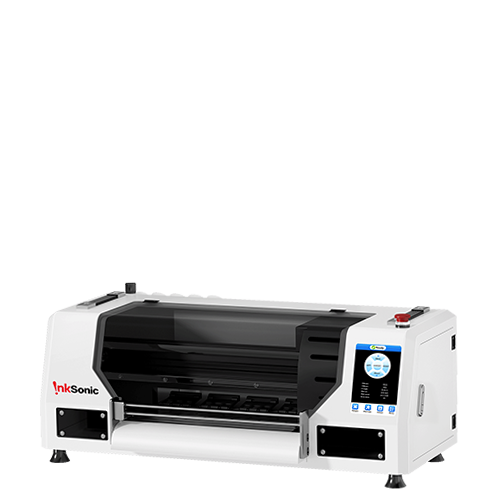
For businesses customizing compatible pre-made phone cases, a compact UV DTF system such as the InkSonic VF13 can be relevant. It should be treated as one production route, not as a reason to build the business around a specific machine before demand and material compatibility are clear.

Manufacturer / Custom Mold
Private-label manufacturing is different from simply printing a blank. It becomes useful when you want a proprietary case construction, finish, packaging system, or hardware feature that cannot be created through decoration alone. Custom molds push that commitment further because tooling, minimum order quantities, freight, and inventory risk become part of the decision.
Step 3. Choose Your Case Types, Phone Models, and First Products
Choose the Case Type
Clear, snap, tough, bumper, and wallet cases all create different production constraints. Polycarbonate, TPU, silicone, leather, and faux leather also react differently to printing, transfers, coatings, and heat. Do not assume that a process that works on one blank will work on every phone case material or surface finish.
The case type should also match the reason people buy from you. A design-led gift shop may prioritize a clear or slim case that shows artwork well, while a protection-focused brand may need a tougher construction. Choose the blank around the customer promise first, then confirm that your decoration method works on that blank.
Limit Your Phone-Model SKUs
A phone case is not one SKU. Every phone model, case type, color, and design can create another inventory combination. Supporting every recent iPhone, Samsung, and Pixel model from day one can turn a small launch into dozens of slow-moving SKUs before you know what customers want.
Use a simple Demand × competition × inventory risk framework. Start with a small set of phone models supported by actual marketplace or audience demand. Expand only after orders show where the demand actually sits. This keeps cash out of blanks that may never move.
Build a Small First Collection
Start with a small first collection, a limited set of phone models, and only the case types you need to test demand. Keeping the initial range focused makes it easier to photograph, price, test, and improve each product. It also gives you cleaner sales data, so you can see which designs and phone models are worth expanding before adding more SKUs.
Produce and Test Physical Samples
Do not launch from mockups alone. Test the camera opening, button alignment, print position, adhesion, color accuracy, surface durability, wireless charging where relevant, and the actual fit on a real phone. A case can look convincing in a mockup and still fail because the graphic sits too close to the camera ring or the blank feels loose in hand.
Photograph the physical samples once they pass inspection. Real close-ups, side views, and installed-phone photos add information that mockups cannot show, and they also give you better material for product pages, ads, and social content.
Step 4. Calculate Startup Costs and Unit Economics
Before you ask whether a custom phone case business is profitable, calculate the cost of one completed order. The selling price has to cover more than the blank and the print. Packaging, payment fees, marketplace fees, shipping subsidies, defects, returns, and customer acquisition can materially change the result.
Cost |
Include |
Case / blank / POD base price |
Product |
Printing/customization |
Ink, film, transfer, labor |
Packaging |
Box, mailer, inserts |
Platform fees |
Marketplace / ecommerce |
Payment fees |
Processor fees |
Shipping subsidy |
Seller-paid portion |
Defects / returns |
Expected allowance |
Customer acquisition |
Ads / creator cost where applicable |
Use contribution margin rather than markup alone: Contribution margin = Selling price - variable costs. That number tells you how much is left from each order to cover fixed expenses and profit. A product can have a large markup over the blank cost and still lose money after shipping, fees, and advertising.
Compare Startup Cost by Production Model
POD usually concentrates startup spending on samples, storefront costs, and marketing. A blank-and-customize model adds inventory, equipment, consumables, and workspace. In-house printing adds the printer itself, maintenance, production space, and a larger set of consumables. Custom manufacturing brings sample development, tooling, minimum order quantities, freight, and deeper inventory commitments.
So, what do you need to start a phone case business? The answer depends on the production model and how much demand you have already validated. Spend first on the things that reduce uncertainty; add capacity after orders justify it.
Step 5. Set Your Price and Decide What Must Be Profitable
Cost and pricing are not the same calculation. Your selling price needs to cover variable production cost, platform and payment fees, expected returns, marketing, operating overhead, and the margin you want to keep. If a discount or free-shipping offer removes that margin, the price was not sustainable to begin with.
A simple pricing check is: selling price - variable order cost - customer acquisition cost = contribution after acquisition. You do not need an industry-standard margin to make this useful. You need a number that works for your actual channel, production model, and return rate.
Step 6. Choose Where to Sell and How Orders Will Be Fulfilled
Channel |
Strength |
Trade-Off |
Etsy |
Built-in custom-product demand |
Competition + fees |
Shopify / own site |
Brand/control |
Must generate traffic |
Amazon |
Large demand |
Marketplace competition |
TikTok Shop / social commerce |
Visual discovery |
Requires content |
Local markets |
Direct feedback |
Harder to scale |
If you are learning how to sell phone cases online, choose one primary channel first rather than trying to master every marketplace at once. Etsy can expose a personalized product to existing search demand, while a Shopify store gives you more brand control but requires you to create your own traffic. Social commerce works best when you can consistently produce short visual content around the product.
Fulfillment
POD fulfillment keeps operations simple but gives the supplier more control over shipping and packaging. Self-fulfillment gives you the most control over presentation and quality checks, but it also adds packing time and inventory management. Manufacturer or 3PL fulfillment can make sense later when order volume is stable enough to justify handing off part of the operation.
Business Basics
Set up the business basics before volume grows: use an appropriate business structure, keep finances separate, understand relevant tax obligations, and publish clear shipping and return policies. Designs, logos, characters, and customer-submitted artwork also need appropriate intellectual-property permissions. These details are not the exciting part of launch, but they prevent avoidable problems later.
Step 7. Get Your First Phone Case Customers
Phone cases are highly visual products, so your marketing should show both how the case is made and how it looks in real use. Blank-to-finished transformations, personalized orders, short printing clips, packing videos, new model launches, and design variations can all help customers understand the product more quickly than generic lifestyle images.
Your product page should then give shoppers the details they need to judge fit and quality. Show the front, back, sides, camera opening, a close-up of the print, and the case installed on an actual phone. This is especially important when protection, edge coverage, fit, or print placement affects the buying decision. Mockups are useful for presenting the design, but real product photos do more to build confidence in the finished case.
For marketplace listings and search traffic, combine the phone model with clear customization or design intent. Terms such as"personalized iPhone case" or "custom [model] phone case"are more targeted than broad phrases that attract shoppers looking for a different product. Focus on the models, styles, and audiences you actually serve so the traffic you attract is more likely to convert.
Step 8. Scale the Products That Actually Sell
Scale winners, not inventory. Track sales by phone model and design, conversion rate, return or defect rate, production time, and contribution margin. If a case gets attention but produces frequent returns, it is not a winner just because the sales number looks good.
Remove slow-moving SKUs, extend strong designs to nearby phone models, and add capacity only when cost, turnaround, or production volume becomes a real bottleneck. A seller may move from POD to in-house production once outsourcing is consistently expensive, but that move should follow the economics rather than precede them. Add complementary accessories only after the core case range has proven demand.
FAQs About Starting a Phone Case Business
Is a phone case business profitable?
It can be, but profitability depends on contribution margin rather than the retail price alone. Include the blank or POD base cost, customization, packaging, fees, shipping support, expected returns, and customer acquisition before deciding whether an order is profitable.
How much does it cost to start a phone case business?
There is no useful universal number. POD can start with samples, a storefront, and marketing, while in-house production adds equipment, blanks, consumables, maintenance, and workspace. Custom manufacturing adds tooling, freight, minimum order quantities, and more inventory risk.
Do I need a printer to start a phone case business?
No. Print on demand lets you validate designs and customer demand before buying production equipment. A printer becomes more relevant when you want faster turnaround, more customization control, or lower in-house production costs at proven order volume.
Can You Start a Phone Case Business From Home?
Yes. The main constraints are your production model, equipment footprint, workspace or ventilation needs, and the amount of blank inventory you plan to hold. POD requires the least production space, while in-house workflows need more room for equipment and packing.
Which phone models should I sell first?
Use demand, competition, and inventory risk together. Start with a small number of high-demand models, add selected niche models where your audience is underserved, and expand only when sales data shows where the next SKU is likely to earn its place.


