







Take a look at a branded water bottle, a wooden sign, or a customized phone case. Notice the print. There is no sticker, and it is not a transfer either. The design sits directly on the surface. In many cases, that is the result of UV printing.
UV printing might not be a familiar term, but it plays a role in many of the printed products people see and use every day. Here is a simple guide to what it is, how it works, and whether it is the right fit for your needs.

What Is UV Printing?
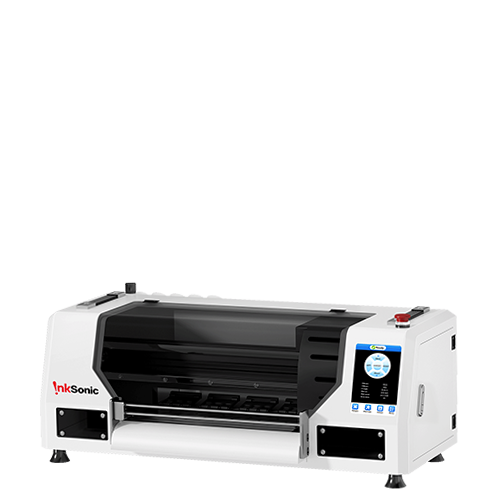
UV printing is a form of digital printing that hardens ink the moment it is placed on the substrate using ultraviolet light. There is no waiting period and no heat-based drying stage. The ink is applied to the surface, exposed to UV light, and turned into a permanent print almost instantly.
The main difference between a standard printer and a UV printer lies in the ink. UV inks contain photoinitiators that react to ultraviolet light. Instead of soaking into the material, the ink stays on the surface and cures into a hardened layer.
That is why UV printing can be used on materials such as metal, glass, acrylic, ceramic, and many other non-porous surfaces.
How UV Printing Works
Step 1: The ink is applied.
Print heads spray small droplets of UV-curable ink onto the material being printed, whether that is wood, glass, metal, plastic, or something else. The ink stays on the surface rather than soaking in.Step 2: The ink is exposed to UV light.
Right next to the print heads is a UV light source. As the print heads move, the light follows directly behind.Step 3: The ink cures instantly.
When UV light hits the ink, it triggers a chemical reaction called polymerization. This turns the liquid ink into a solid layer almost immediately. There is no separate drying stage.Step 4: The print is ready to use.
Because the curing happens during printing, the finished piece is ready as soon as the print pass is complete.
One final note on the light source: older UV printers used mercury lamps, but most modern machines now use UV LED arrays because they generate less heat and last longer.
UV Printing Pros & Cons
Pros
UV printing offers a few clear advantages, especially for short runs, custom work, and materials that other methods struggle to handle.
Wide Material Compatibility
UV printing works on wood, glass, metal, acrylic, ceramic, leather, and many plastics. That range makes it far more flexible than most other digital print methods. For businesses producing signs, packaging, promotional items, or custom products across different surfaces, that kind of versatility removes a real constraint.White Ink Support
UV printers support white ink as a dedicated channel. On dark, clear, or reflective surfaces, a white base layer helps colors stay visible and accurate. For printing on black acrylic or clear glass, it is often essential.No Minimum Order
There are no screens or plates involved, which means no setup costs need to be spread across a minimum run. One item or fifty can be produced using the same workflow. That makes UV printing a practical option for samples, prototypes, and short-run custom work.Durable Print Finish
UV-cured ink forms a hard surface layer that holds up well against scratching, moisture, and regular handling. For products used outdoors or shipped repeatedly, that durability is a real advantage. In many cases, no extra protective coating is required.Fast Turnaround
Since curing happens during printing, there is no drying time between production and dispatch. Prints come off the machine ready to go. For tight deadlines or quick-turn jobs, that saves valuable time.
Cons
UV printing has clear strengths, but it also comes with a few limitations worth knowing before you commit to it.
-
High Equipment Cost
UV printers sit at the more expensive end of the market. Desktop models exist, but anything capable of real production volume requires a serious investment. Most small businesses find it more practical to outsource UV printing rather than buy the equipment outright. -
Higher Ink Costs
UV inks cost more per liter than standard inkjet inks. For small jobs, that difference is manageable. At higher volumes, it becomes a more meaningful cost factor. -
Limited Flexibility on Soft Materials
UV ink cures into a rigid layer. On surfaces that bend or flex repeatedly, such as soft plastics, flexible films, or fabric-backed materials, that rigidity can cause the print to crack over time. -
Surface Preparation May Be Needed
Smooth glass and some plastics do not always grip UV ink reliably straight off the machine. A primer coat is sometimes needed before printing to improve adhesion and long-term durability. That adds a step to the process and can affect both cost and turnaround time. -
Not Ideal for Fabric
UV ink sits on top of fabric fibers rather than bonding into them. For garments or textiles that go through regular washing, the print will not hold up the way DTG or DTF prints do. If apparel is your main focus, UV printing is not the best starting point.
What Can You UV Print On?
UV printing works best on hard, stable surfaces, which is why it is so common in signage, packaging, promotional products, and custom décor. Different materials behave differently, so it helps to know what to expect.
Wood and MDF
Wood and MDF print cleanly and usually need no preparation beforehand. The surface holds color well and produces sharp, solid results. This makes them a reliable choice for signs, décor panels, and personalized products.

Glass
Glass works well for awards, display panels, bottles, and decorative pieces. The surface supports sharp detail and strong color contrast. On very smooth glass, a primer is sometimes applied first to improve long-term adhesion.

Metal
Aluminum, steel, and coated metal surfaces handle UV printing reliably and produce crisp, durable results. They are commonly used for nameplates, industrial labels, branded drinkware, and signage. In most cases, no primer is needed.

Acrylic
UV printing works very well on acrylic because the ink cures cleanly on the surface, holds fine detail, and gives the finished piece a polished look. Clear acrylic works especially well when a layer of white ink is printed beneath the design, giving the colors a solid base to stand out.

Plastics
Many different plastics can be UV printed, including polycarbonate, PVC, ABS, and PETG. Some need a primer while others print well without extra preparation. If you are printing a new plastic material for the first time, testing first is always a good idea.

Leather
UV ink can be used on both genuine and faux leather. It is often applied to products such as notebooks, wallets, and name tags. Because leather surfaces can vary in texture and coating, testing is recommended before full production.

UV Printing Compared to Other Methods
The right printing method usually comes down to four things: material, order size, artwork complexity, and durability. UV printing covers a lot of ground, but it is not always the best fit. Knowing where other methods have an edge makes the decision much easier.
Screen Printing
Screen printing is the go-to method for high-volume fabric work or simple, bold designs. Every color in a design requires its own physical screen, so there is always an upfront setup cost before a single item gets printed. That cost makes minimum orders common, but once setup is complete, the per-unit cost at volume is hard to beat.
For large batches of consistent designs on fabric, screen printing is usually the more cost-effective choice. For smaller runs, complex artwork, or anything printed on a hard surface, UV printing makes more sense.
DTG (Direct to Garment)
DTG was built for fabric, especially cotton. The inks soak directly into the fibers, which gives the finished print a soft feel that becomes part of the garment rather than sitting on top of it. It has no setup fees, no minimum order, and handles detailed full-color artwork well.
For custom cotton T-shirts and hoodies, DTG is the natural choice. If the surface is wood, glass, metal, or plastic, UV printing is the better tool.
DTF (Direct to Film)
DTF prints onto a transfer film first, then heat-presses the design onto the fabric. That extra step gives it more flexibility than DTG. It works on a wider range of fabrics, handles dark colors better, and avoids pretreatment in many cases.
For fabric transfers across mixed materials or dark garments, DTF is often the better choice. For direct printing onto rigid surfaces, UV printing is the more straightforward option.
UV Printing |
Screen Printing |
DTG |
DTF |
|
Best For |
Rigid products |
Bulk apparel |
Cotton garments |
Fabric transfers |
Best Material |
Wood, glass, metal, acrylic |
Fabric and paper |
100% cotton |
Most fabrics |
Minimum Order |
1 piece |
24–50+ pieces |
1 piece |
1 piece |
Setup Cost |
None |
High (per screen) |
None |
None |
Best Use Case |
Custom gear and signs |
Large uniform runs |
Detailed T-shirts |
Mixed-fabric apparel |
Final Thoughts
UV printing does one specific job very well. Hard surfaces, short runs, and complex artwork are where it performs best. For businesses producing custom products across a range of surfaces, it is one of the most flexible digital printing methods available.
It is not the right answer for every project. Bulk fabric orders are usually more cost-effective with screen printing. Garment customization belongs to DTG or DTF. And if buying equipment is not realistic yet, outsourcing to a UV print provider is a practical way to use the technology without the upfront investment.
If the surface is hard and the run is short, UV printing is worth serious consideration. If the job is fabric-based, another printing method will usually be a better fit.


