


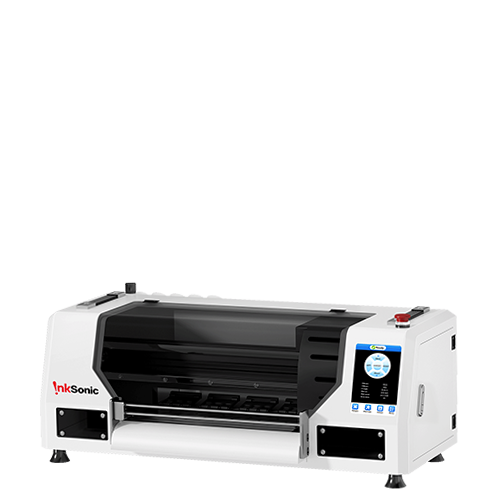


If you have attempted to print an ink coverage design on socks via a conventional flatbed printer, you will undoubtedly know that you will be met with the same problem: pesky white gaps!
The design looks great on the printer, but once it is put on it splits apart and exposes white, unprinted areas under the seam or rib. It is a production nightmare! On the surface, socks appear to be a straightforward and compact item to customize, yet once you need quality, marketable products, they become one of the toughest items to produce. This is exactly why the socks printer exists.
What Is a Socks Printer?
A socks printer is a dedicated digital inkjet solution engineered to handle the unique challenges of sock decoration. By utilizing advanced DTG or sublimation technology, these machines bypass the limitations of weaving and screen printing, offering the freedom to print high-definition, multi-color artwork. Unlike standard flatbed printers, a true socks printing setup is designed to wrap graphics seamlessly around the garment’s 3D geometry, ensuring the design stays sharp even when the fabric is stretched.

Why Socks Need a Different Printing Approach
It is also an issue of shape. Contrary to T-shirts which lay flat and maintain consistency throughout printing, socks are a 3D object that are elastic and are constantly subjected to the forces exerted by their structure. The cuff, leg, heel, foot, and toe have different behavior, and elements such as seams and ribbing add to the difficulty of the task.
Therefore, socks cannot be treated as a miniature replica of regular clothing. Design can seem okay during preparation but appear to become misaligned when the sock gets stretched or is being worn. Areas which appear to be covered in the 2D workflow process end up appearing as blanks in the sides of the sock when used.
This is actually the reason why socks need to be printed differently from other clothes. The problem is not the simple task of applying ink to the fabric; rather, it is about applying the art in the right place and in the right way.

How a Socks Printer Actually Prints
Most socks printers use digital inkjet technology, so the print method itself may feel familiar if you have worked with other textile printing systems. The real difference is not the general printing concept. It is the way the product is handled. A sock is usually not printed flat on a platen. Instead, it is pulled over a holder, form, or cylindrical support that opens up the printable area and gives the fabric more structure during printing.
That handling method is what makes broader print coverage possible. On a dedicated socks printing machine, the sock can be positioned or rotated so the image reaches more of the visible surface. This is one of the clearest differences from flatter transfer-based methods, which often have trouble carrying graphics neatly around the sides of the sock.
In a simple process flow for printing, the graphic would be prepared first, followed by mounting of the sock onto the frame, printing, and ultimately curing or fixing if necessary based on the type of ink system being used. The order of the process may vary with the equipment used, but the general concept remains the same. The design of the printer allows for printing graphics on an elastic shaped textile product.
What Makes a Socks Printer Useful in Real Production
The value of a socks printer goes beyond just getting ink onto fabric. It is about producing a finished product that actually looks the part.
This equipment will be useful when you want a full coverage printing. In case when you have a request for edge to edge or vivid images, a dedicated socks printer produces a higher quality of finish that flat-bed versions cannot provide. This way it helps to avoid visible gaps.
However, there is more to it than just good quality of print. It is all about the ability to repeat the process on the same level of quality again and again. When you fulfill an order for your local school team or some nationwide marketing campaign, the sample of product is one thing, but 500 items should be identical.
And lastly, it makes possible to do high-quality customization of the products. Names, numbers, mascots, logos – these things can make a difference for your customer. When you consider socks as a core product line of your business, it becomes a must have feature.

What Else Can a Socks Printer Print?
Some socks printers can be used for more than socks, but that depends heavily on how the machine is built.
If the system uses supports for shaped or tubular textile items, it may also be able to handle products like arm sleeves, compression sleeves, wristbands, or similar accessories. The deciding factor is usually not the product category name. It is whether the item can be mounted securely and whether the printable area can be controlled well enough for consistent output.
That said, flexibility should not be assumed. Not every socks printing machine is designed as a multi-purpose platform, and not every accessory behaves the way a sock does during production. In most cases, the machine design matters more than the label attached to the product.
Where a Socks Printer Fits Best
A socks printer is only worthwhile when socks will become an actual product category and not merely an occasional embellishment. The value of this printing method can only become clear when coverage, repeatability, and better product presentation become important factors.
This is especially true when it comes to companies designing team socks, promotional socks, branded goods, retail lines, or custom gift items. In such cases, it is almost always easy to tell the difference between an incomplete design and an elaborate sock graphic design.
At the same time, it should be remembered that the product itself has its own limits and determines how far a design can be extended across the material. Good printing equipment goes a long way towards this goal but does not make the product itself any less important.
Final Thoughts
A socks printer is not simply a machine used to print on a smaller piece of apparel. It exists because socks require a different printing approach from the beginning.
The biggest difference comes down to product handling. That is what makes better alignment, wider coverage, and more consistent sock graphics possible. For businesses that want custom socks to look more polished and more complete, that is exactly why this machine category matters.
FAQ
1. What’s the difference between a socks printer and a regular T-shirt printer?
A T-shirt printer prints on a flat garment placed on a platen. A socks printer prints on a curved, stretchy sock mounted on a cylindrical roller. That different handling method is what allows a socks printer to produce full-coverage graphics without white side gaps.
2. Is a socks printer worth buying?
It depends on your business. If custom socks are a real product category, especially for team merch, promotional orders, or retail collections, a socks printer usually pays off. If sock orders are only occasional, outsourcing or existing workflows may make more sense.
3. What is the roller diameter of a socks printer?
Roller diameter varies by machine. Different socks printers offer different roller sizes to fit ankle, crew, or knee-high socks. Choosing the right roller size directly affects print alignment and coverage quality.
4. What kind of socks can be printed on a socks printer?
Most socks printers work best with polyester or polyester-blend socks that have a smoother knit surface. Fully cotton socks or heavily ribbed socks may produce less consistent results. Always test blank socks before bulk production.
5. Can a socks printer print full-color designs?
Yes. Socks printers use digital inkjet technology, which supports full-color, high-resolution graphics, gradients, and complex patterns. This is a major advantage over traditional methods like weaving or screen printing.


