


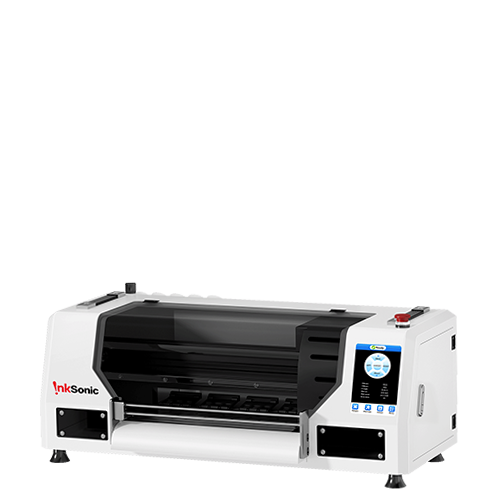


If you have been current on trends within customizable clothing and branded merchandise, then chances are that you will have seen or at least heard about the term DTF printing. But what does it stand for and why has this term become a star within garment decoration?
Here, we'll outline what does DTF mean in printing, take a step-by-step tour of how it works, how it compares to other hot printing methods, and a broad range of applications where DTF truly excels. By then, you'll know why countless creators and companies are coming to this technology to create brilliant long-lasting prints.
What does DTF Stand for?
DTF stands for Direct-to-Film. It's a process that has a rather self-descriptive name because it prints a design directly onto a special transfer film rather than directly onto fabric. That printed film is then coated in adhesive powder, heated to set it up, and then pressed onto whatever substrate is desired in a heat press.
Distinctive regarding this technology is that it can produce long-lasting full-color prints on any type of fabric and product—which is orders of magnitude further ahead of what can be done traditionally. Whether cotton, polyester, nylon, or even specialty items such as tote bags or caps, DTF has versatility that very few other printing technologies can even approach.

What is a DTF Printer?
Have you ever held a T-shirt with a design so vivid it almost looked painted on, and wondered how it was made? That’s where the answer to what is a DTF printer comes in.
If you are new to Direct-to-Film printing, then perhaps you are thinking about what is a DTF printer and how it stands out compared to others. This printed film with an adhesive powder applied thinly and subsequently cured or heated becomes the conduit between the digital image and fabric you are adorning.
When pressed into cotton, polyester or a nylon jacket, the image adheres directly on—bright, flexible, and permanent. A DTF printer is more than a technological piece; it is a piece of machinery that provides the bridge from mere imaginations to wearable artwork.
Required Materials and Equipment for DTF Printing
Setting up with DTF involves some fundamentals:
DTF Printer – Available in desktop sizes (like A3) or industrial roll-to-roll models.
PET Film Sheets or Rolls – Specially coated transfer film for holding the design.
DTF Inks – Water-based pigment inks, including white ink for underbases.
Adhesive Powder – Fine powder that bonds ink to the fabric.
Curing Unit or Oven – For melting and bonding the powder.
Heat Press Machine – Applies heat and pressure to transfer the design.
Optional add-ons include automatic powder shakers, air purifiers, and storage racks for keeping film dust-free.
What is the Print Work Procedure?
DTF printing is basic but has a step-by-step procedure that is crucial in order to achieve quality standards. This is how it proceeds:
1. Design Creation
It begins with a computer drawing, typically created in a graphics application such as Photoshop, Illustrator, or CorelDRAW. It's then set up with appropriate size, resolution, and colors to ensure it will print out right.
2. Printing on PET Film
It is then printed upon a transparent PET film (polyethylene terephthalate) via a special printer and pigmented water-based inks. A special coating on the film makes ink stick and prevents smudging while going to be transferred.

3. Powder Application
While the ink has not yet dried, hot-melt adhesive powder is spread across the design. It is this powder that will cause the print stick down permanently to the fabric later. By hand, this can be accomplished in small operations, but in larger production operations, automatic shakers perform this step uniformly and efficiently.

4. Curing the Powder
The film, now coated in adhesive powder, is then heated—with a curing oven, heat press, or other heater. The powder melts slightly and fuses into the ink to create a firm, Transfer-ready layer.
5. Heat Press Transfer
Lastly, the prepped film is placed on the garment or substrate and pressed with pressure and heat. Once pressed, the film is removed by peeling, and a rigid, vibrant design adheres permanently to the substrate.
It is a quick and highly flexible procedure compared to other printing techniques, and this reality allows it to operate both within small companies and large establishments.

DTF Printing vs. Other Printing Methods
To truly understand how big a role DTF plays, it's a good concept to understand how it relates to other typical decoration methods.
DTF vs. DTG (Direct-to-Garment)
It's Direct-to-Garment printing, ink sprayed directly onto fabric. Although DTG looks wonderful on cotton and creates soft hi-res prints, it doesn't quite cooperate all that well on blends or non-textile applications.
DTF, on the other hand, isn’t restricted by fabric type. Since the design is transferred from a film, it adheres equally well to cotton, polyester, nylon, and even specialty fabrics. DTF prints are also more resistant to repeated washing, often outlasting DTG in durability tests.
DTF vs. Heat Transfer Vinyl (HTV)
HTV consists of cutting out letters or designs in colored sheets of vinyl and then transferring them to apparel. While great for bold designs or simple type, HTV falls short in delicate or multi-color work.
DTF eliminates that issue because full-color, gradient-filled photorealistic graphics can be printed in a single step.
DTF vs. Screen Printing
Screen printing has long been a staple in mass production. But a screen must be created for each color and this accelerates time, cost, and setup complexity. It's less efficient in running a small production or multi-color application.
DTF simplifies the process by handling full-color artwork in one pass, with minimal setup. For one-off items or short runs, DTF is far more practical, while still maintaining strong durability.
Method |
Best For |
Fabric Compatibility |
Setup Cost |
Durability |
Color Range |
Small Orders |
DTF |
Apparel & promos |
Cotton, polyester, blends, nylon |
Low |
High |
Full-color, photo-real |
Excellent |
DTG |
Cotton tees |
Mostly cotton |
Medium |
Moderate |
High detail, limited fabrics |
Good |
HTV |
Simple logos/text |
Most fabrics |
Low |
Moderate |
Solid colors only |
Good |
Screen Print |
Bulk orders |
Cotton, blends |
High |
High |
Limited by screens |
Poor |
Sublimation |
Polyester items |
Polyester only |
Medium |
High |
Vibrant, but fabric-limited |
Poor |
Applications of DTF Printing
One of the reasons DTF printing has gained such a loyal following is its versatility. It’s not limited to T-shirts—though it excels there—it also opens up creative opportunities across a variety of industries.
Apparel
From t-shirts to hoodies, jackets to sports clothing, natural and synthetic fabric receive brilliant long-lasting prints with DTF. Contrary to some techniques that become cracked or fade out after a few washes, DTF prints remain flexible and brilliant in the long term.
Promotional Products
Look beyond apparel—DTF can be used to embellish tote bags, caps, mousepads, and even such odd things as umbrellas or beverage containers (when materials are appropriate). For companies seeking to imprint branded promotion products, having the capacity to imprint intricate logos and artwork is a large plus.
Custom Patches and Emblems
Another growing trend is creating DTF patches. These can be made in advance, stored, and applied when needed. The patches capture fine detail and photorealistic images that embroidery can’t achieve, while still offering durability. They can also be applied permanently or designed as removable patches for flexible use.
Why DTF is Changing the Game
To sum it up, DTF printing combines the best of several worlds:
Full-color printing without complicated setup
Long-wearing durability resistant to washing and wear
Versatility in a wide range of fabric materialand non-textile materials
Scalable efficiency capableboth of small-batch customization and mass production
For hobbyists, small business, or current print shops, DTF opens a doorway to create high-end materials without older technology's high learning curve or equipment requirements.
Conclusion
DTF printing is an emerging technology that has quickly attracted the attention of the custom printing industry as one of the most popular methods for garment printing. The ease of the process, along with the ability to produce stunning, high-quality full-color garment printing quickly and reliably, is a huge bonus for anyone who wants to print incredible designs on t-shirts and other products.
What does DTF mean?
DTF printing meaning you can start your side hustle with minimal investment. It may be the right opportunity for you if you are starting a t-shirt business from home or adding new product lines and want to understand and investigate the creative opportunities DTF process has to offer that previous methods of printing do not provide.


