


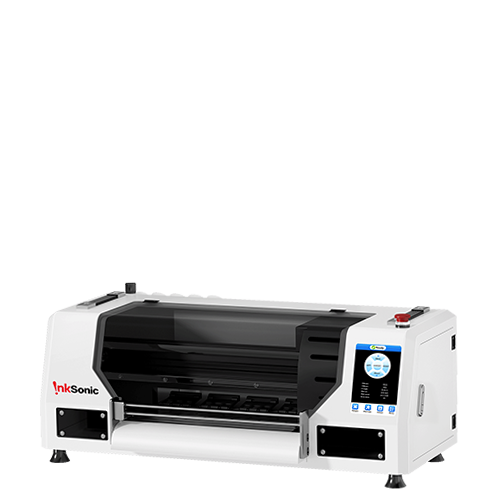


DTF technology has become the first choice for professional print shops and small business owners alike when it comes to custom clothing print. Unlike screen printing or sublimation, DTF printing can print full-color images onto almost any type of fabric with remarkable precision.
What makes a DTF printer with white ink special is the gradient of colors and opacity that it produces, even on dark or colored fabrics. In addition, the white ink acts as a foundation layer, which provides depth and contrast to your prints with a professional level of vibrancy. In this article, we’ll explore the top benefits and why it’s a must-have for any apparel printing business.

1. Print Bright, Vivid Designs on Any Fabric Color
The most obvious advantage of having a DTF printer with white ink is the ability to print on dark or colored fabrics. White ink creates a solid underbase that helps your design colors pop. Without it, bright colors like red, yellow, or blue would look dull, or invisible, on black shirts.
This opens up new creative, and business options, you can now print high-contrast logos on hoodies, tote bags, denim jackets, or other dark materials that went out the door with the standard CMYK printers.
2. Enhanced Opacity, Detail, and Professional Finish
A white ink layer doesn’t just brighten colors—it adds depth and dimension to your prints. It acts as a softly reflective base, which helps maintain color alignment and provides dependable opacity.
No matter what you’re printing, whether fine details, gradients, or bold text, the white ink layer creates great edges and smooth transitions. The result: prints that look expensive, feel professional, and even stand up to numerous washes.
If you incorporate a reliable white ink circulation system, you also benefit from uniform ink circulation, which eliminates any banding or lack of even white coverage, which can easily ruin the quality of a print.

3. Stable Performance with White Ink Circulation
White ink contains high concentrations of pigments like titanium dioxide, which can settle in the course of time. That might lead to clogging, skewed prints, or even printhead damage if not settled.
This is the reason why a white ink circulation or stirring system is required. Circulation maintains pigments in uniform distribution and also prevents sedimentation.
An accelerated-performance white ink pump continuously recirculates and agitates the ink to keep it uniformly dense, having better flow, and more reliable over the long term. This keeps your white ink print-ready—without constant manual agitation or cleaning.
4. Expand Your Custom Apparel Product Range
By investing in a DTF printer with white ink, you’re no longer limited to printing on light-colored cotton shirts. You can now take on orders for:
Black and dark-colored t-shirts
Hoodies and sweatshirts
Canvas bags and denim jackets
Nylon or polyester workwear
Even custom accessories like hats or patches

That’s the kind of market flexibility that enables your company to punch above its weight — especially for customers seeking full-color custom artwork on dark apparel. Flexibility also gives your business the ability to better serve your customers, to add service lines, and potentially increase profit margins.
5. Less Waste and More Consistent Output
White ink systems that include proper circulation and stirring aren’t just about quality—they also help reduce waste. Blocked nozzles, inconsistent prints, or buildups of sediment can waste transfers and materials.
Having a dependable ink flow and less downtime will keep your production more efficient and predictable. For every misprint avoided, you save money, time, and improve customer experience.
6. Easier Maintenance and Longer Printer Life
White ink is thicker and denser than CMYK inks and therefore requires regular maintenance. However, DTF printers with automatic circulation systems for white ink make it easy.
Automatic circulation prevents the precipitation of pigment, reduces the need for manual cleaning, and saves your printhead. Simply put, a well-engineered printer not only delivers better print quality but also extends the life of your hardware.
7. Better ROI for Printing Businesses
While DTF printers may cost slightly more upfront, the long-term benefits easily outweigh the investment. You gain:
Access to more diverse printing projects
Professional-grade color reproduction
Lower waste and maintenance costs
Increased order volume from premium print options
If you own a small clothing line or custom print shop, this setup can be recouped in a hurry with the higher value items and repeat customers.

8. Key Takeaways
White ink = foundation layer: It enables vibrant prints on dark and colored fabrics.
Circulation is essential: Prevents clogging and keeps pigments evenly mixed.
Enhanced quality: Produces crisp, durable, and professional-grade designs.
Broader market reach: Print on a wider range of fabrics and products.
Sustainable performance: Less waste, easier maintenance, and better reliability.
Conclusion
A white ink DTF printer isn't an upgrade, it's the hub of a professional-level printing system. It is design for your business freedom, it is design to open markets and to introduce the level of color vibrancy that your customers will notice straight away.
For vibrant prints and reliable output, opt for a printer with a high-quality white ink circulation system – such as the ones from InkSonic.
FAQ:
1. Why is white ink important in DTF printing?
White ink acts as the foundation layer in DTF printing. It forms a robust, opaque layer, so colors can pop and stay true to design — specially when applied on dark or colored fabric. Your prints would look washed out or have no contrast without the white ink. A printer with white ink makes everything pop, whatever color clothing you're printing on.
2. How does a white ink circulation system operate?
There is a white ink circulation system that keeps the titanium dioxide pigments dispersed homogenously in white ink. It uses a pump and tubing configuration to keep the ink continuously stirred or circulated from the tank to the printhead. This prevents sedimentation of the pigments, clogging, and assures constant print opacity.
3. How can I maintain fresh white ink on a DTF printer?
Below are some maintenance steps that are crucial:
Run the printer daily or at least every other day to have ink circulation.
Use circulation systems automatically to prevent sedimentation.
Clean printheads and capping stations with appropriate cleaning solution regularly.
Store ink upright in a dry, cool place.
Maintenance ensures that your printer with white ink is running like clockwork and lasts longer.
4. What issues can occur if the white ink isn’t circulated properly?
If the white ink settles or thickens, you might experience:
Clogged printheads or uneven ink flow
Banding and inconsistent white coverage
Reduced print brightness or opacity
Most of these problems are eliminated when using a high power white ink pump printer with constant ink density and flow.
5. Can I print on light colored garments without white ink?
Yes — you can disable the white ink layer when printing on white or very light colored material and save some ink and printing time. But you need the white ink underbase if you are printing on any medium or dark garment to get full color vibrancy and opacity.
6. Which model with white ink is the most suitable for a small business?
The InkSonic L1800 E13 is a great choice, especially if you're just getting started. It's a pretty decent printer with automatic white ink circulation, stable printing performance, and low maintenance costs — a great fit for beginners and small apparel brands. As production demands go up, you can get slightly larger inkjet printers that offer better speeds and color accuracy — for example, the InkSonic XP600 U13.
7. Does white ink affect the feel or flexibility of the print?
When applied correctly, white ink adds minimal thickness while enhancing durability. The final print remains soft, flexible, and stretch-resistant after curing — especially when using high-quality DTF hot melt powder and film designed to bond evenly with the white ink layer.
8. How often should I clean the white ink system?
For consistent performance:
Automatic systems: weekly inspection is usually enough.
Manual systems: perform manual stirring and nozzle cleaning every 2–3 days.
If your printer is used daily, schedule deep cleaning every 1–2 weeks. Following this routine keeps your white ink in prime condition and prevents expensive downtime.
9. What’s the difference between white ink and regular CMYK inks?
White ink has a heavier weight of pigment and is opaque, which is meant to reflect light instead of absorbing it. It uses titanium dioxide to create thickness and density. CMYK inks are transparent and use the white background of the garment to appear bright. This is why only the DTF printer with white ink can print on any dark materials while remaining vibrant.
Pro tips:
Before you print, always check your white ink layer settings in RIP software to ensure proper density and alignment — this can make or break your print quality.


