




If anything, the demand for custom clothing has only intensified, from T-shirts to hoodies, as has the technology to print clothes. Just the global custom t-shirt printing industry reached $4.3 billion and the market size CAGR is projected to continue 9.7% through 2030 due to more people wanting their perfectly fitted clothing and on-demand fashion. In response to the demand, the 2 biggest printing technologies are the most popular ones today – DTG (Direct to Garment) and DTF (Direct to Film) .
The right printing method can mean the difference between turning a profit and closing up shop for a small business designing custom apparel. Both methods produce good print quality and are suitable for single-unit or small batch production, but vary significantly in cost, the type of fabric they can work with, and ease of use. These key differences can later become known small business obstacle for those low on startup capital to know about and make the best decision.
Here, we're going to break down the pros and cons of DTG vs. DTF printing, comparing them to real-world applications and what's being said on the street about them. Warning: if you're in the market for an affordable, user-friendly solution — DTF might just be the ticket .
What is DTG Printing?
DTG (Direct-to-Garment), this printing technique is done by spraying water-based ink directly onto the fabric for amazing detail. And, much like traditional paper printers, DTG machines can print digital designs directly onto pieces of clothing, usually T-shirts.
This method is popular for accurately reproducing photographs and other artworks containing continuous tones or smooth color gradients and intricate details. DTG makes the most sense for 100 percent cotton or high cotton blend fabrics, as these allow the ink to deeply bond and create a strong bond.

Pros of DTG Printing:
-
High-resolution, detailed prints — ideal for intricate designs and photographic quality.
Soft finish — the ink absorbs into the fabric, giving a smooth, non-plastic feel.
No color limitations — perfect for full-color prints on white or light garments.
Cons of DTG Printing:
High priced equipment— starting at the $10,000 mark for entry-level machines and going up to $20,000 or more for a professional setup.
Slower production —This technique is most effective for print-on-demand or small batch orders, as it offers slower production speed, which is a con for large-scale mass production.
Pre-treatment required —time-consuming, especially for dark garments.
High maintenance —requires frequent cleaning to avoid easily clogged printheads.

DTG printing offers exceptional quality, but maintenance and upfront costs make it unfriendly for low-risk first-time entrepreneurs. That’s where DTF printing comes into the picture.
What is DTF Printing?
Direct-to-Film (DTF) printing is one of the emerging methods in the garment customization industry, and it has grown quickly. Unlike DTG, DTF doesn’t go directly onto the fabric. Rather, the design is printed onto an exclusive PET film with DTF ink. Subsequently, hot-melt powder is applied to the printed design and is cured, resulting in a design that is prepared to be transferred. The last step requires placing the design onto the garment with a heat press.
This method provides such amazing versatility – you can print to all kinds of fabric from cotton, polyester, to blends, nylon, and more – and you don’t need any pre-treatment! It’s particularly attractive to small business owners who don’t want to invest a lot of money up front, don’t want a long and onerous back-end setup.

Pros of DTF Printing:
-
Highly versatile — works on nearly all fabric types: cotton, polyester, blends, denim, canvas, etc.
No pre-treatment needed — saves time and reduces chemical use.
Lower equipment cost — entry-level A3 DTF printers often start under $2,000 , making them budget-friendly for startups.
Easy to maintain — less downtime and fewer clogs than DTG.
Cons of DTF Printing:
Requires a heat press — an additional piece of equipment for final transfer.
Involves film handling and powder application — slightly more manual work than DTG.
Film storage and humidity sensitivity — designs printed on film need to be stored properly.
The other great advantage of DTF printing is the streamlined workflow it offers, especially when paired with an all-in-one powder-shaking and curing machine. You can apply the hot-melt powder and cure the film with minimal handling and very little time to carry out the entire procedure. Following the curing of the design, the thermal transfer process takes only 15–30 seconds with a standard heat press.
Even after factoring in the cost of the heat press, the total investment in a DTF setup is well under a DTG system — with faster production and reduced operation stress. Low-cost, simple operation, and versatility across a variety of fabrics have made DTF a go-to choice for small businesses and side hustlers in short order.
DTG vs DTF – Which Should You Choose?

After reviewing the two print methods, there are advantages and best uses for each option. For example, DTG can achieve ultra-high resolution prints on cotton apparel and is widely used by premium luxury fashion brands. On the other hand, however, the high upfront cost, ongoing upkeep, and compromised production rate are all detriments – especially for first-time operators.
Conversely, DTF provides a generic, budget-friendly, and novice-minded solution. Its broad applicability to various materials, lesser investment needed, and quicker printing time make it a great option for small-scale business owners and startups who wish to expand with minimal financial risk.
In the sections below, we’ll summarize the pros and cons of each method and explain why DTF stands out as the smarter option for most small businesses.
Feature |
DTG Printing |
DTF Printing |
Printing Method |
Direct inkjet printing on fabric |
Prints on film, then heat-transferred to fabric |
Fabric Compatibility |
Mainly cotton or high-cotton blends |
Works on cotton, polyester, blends, nylon, etc. |
Upfront Cost |
$15,000–$30,000+ |
$1,500–$3,000 (A3 DTF) |
Pre-Treatment Needed |
Yes (especially for dark garments) |
No |
Production Speed |
Slower (5–7 min/shirt incl. curing) |
Faster (15–30 sec transfer) |
Print Quality |
Excellent detail; best on light cotton |
Very good; vibrant colors with strong durability |
Maintenance |
High–daily/weekly cleaning required |
Low – usually includes auto-cleaning |
Durability |
Good, especially on light cotton |
Excellent – strong wash resistance |
Learning Curve |
Moderate to high |
Beginner-friendly |
Best For |
High-end, cotton-only premium apparel |
Startups, small biz, multi-fabric products |
Compared to DTG, DTF printing is simply more applicable to a wider range of real-world scenarios . No matter what type of material you transfer, whether it be cotton, polyester, canvas, denim, or blends — DTF is the answer.
It's certainly not only T-shirts that can be designed. You can also create custom designs for tote bags, hoodies, caps, and even for items that are more complicated to print, such as sleeves and socks. For business owners, this makes DTF a more sensible option as they do not have to invest in several different printing systems.

Cost Comparison: DTG vs DTF for Startups
When choosing between DTF and DTG, evaluating up-front costs is critical, particularly for very small businesses. Here’s an analysis focusing on equipment and supplies as well as on-going costs:
Equipment Cost
- DTG Printer: Entry-level machines are in the range of $15,000–$20,000 . Whereas industrial DTG machines can easily exceed $30,000.
DTF Printer: A reliable A3 DTF printer can be purchased in the range of $1,500–$3,000 and often includes a film roll feeder and basic software.
Supplies and Materials
-
DTG: Requires water-based ink, pre-treatment liquid (especially for dark garments), cleaning supplies, and maintenance kits. Pre-treatment can add $0.50–$1 per shirt.
DTF: This method uses DTF ink, PET films, and hot-melt powder. The best part is that there are no pre-treatments. Cost per print is typically $0.30–$0.60 , depending on size and coverage.
Maintenance
-
DTG: Requires daily or weekly maintenance routines, especially to prevent printhead clogs. Downtime can be costly.
DTF: Generally easier to maintain. Most machines have auto-cleaning systems , and ink systems are more forgiving if not used daily.
Production Speed
-
DTG: Slower due to pre-treatment, printing, and curing time (up to 5–7 minutes per shirt).
DTF: Faster production cycle; once the transfer is ready, it only takes 15–30 seconds to apply the design via heat press.
Cost Insight
For the budget-driven business owner, DTF printing offers significantly less of a barrier to entry, with simple fabric versatility and quicker ROI . While DTG prints high-quality results, its greater initial investment and maintenance needs can be intimidating for home-based businesses or small startups.
Real-World Use Case: Why Small Businesses Are Choosing DTF
When Texas stay-at-home mom Sarah made the decision to turn her design passion into a custom T-shirt business in 2023, she was excited — but overwhelmed. Having researched some, she was immediately intimidated by the idea of starting with DTG printing, which would be over $20,000 upfront, plus monthly expenses in pre-treatment fluid, cleaning kit, and printer maintenance. Alone, the high up-front cost daunted her enough to abandon the dream altogether.
Determined to find a more practical solution, Sarah discovered DTF printing . She invested in a compact A3 DTF printer and heat press bundle for under $2,500 — a decision that changed everything. After a couple of web tutorials and some trial and error, Sarah was printing shiny, pro-level photos on T-shirts, tote bags, and even polyester hoodies — without pre-treating, color limitations, or fabric restrictions.

"DTF gave me the autonomy to start small and grow in my own pace, without going into debt," Sarah says. "I started accepting orders on Etsy in two weeks, and customers were amazed at how full-bodied the prints were."
In a few months, Sarah's small side venture became a thriving home business, solely because she made the right technology decision for her budget and goals .
“DTF completely changed the game for me. I was able to start small, sell on Etsy, and grow without going into debt. The prints' quality left my customers amazed, and I did not need technical skills to begin.”
Sarah’s story is not atypical. All around the world, tons of small brands, home based businesses, or side hustlers are flocking to DTF since it is inexpensive , flexible, and results in professional quality. Whether you are customizing shirts for a charity, printing merchandise for influencers, or launching a new streetwear brand — DTF allows you to start small while you scale quickly.
Best DTF Printer for Small Budgets
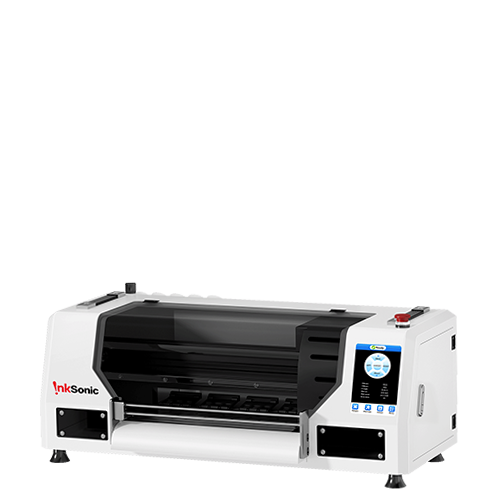
If you're ready to launch your custom apparel business without breaking the bank, the Inksonic XP600 A3 DTF Printer is one of the most reliable and budget-friendly options available today. Designed for small businesses and beginners, this compact yet powerful printer delivers professional-grade results at a startup-friendly price.
Priced under $3,000 , the Inksonic XP600 comes equipped with everything a new garment printer needs to succeed:
-
White Ink Circulation System – Prevents clogs and keeps your ink flowing smoothly.
Auto-Cleaning Function – Reduces downtime and daily maintenance.
High-Precision XP600 Dual Printhead – Produces vibrant, detailed prints with consistent quality.
Compact A3 Size – Ideal for home studios, small shops, or limited workspaces.
Supports Various Fabrics – Print on cotton, polyester, blends, and more — no pre-treatment needed.
Get set up fast as a small business printing custom t-shirts, tote bags, hoodies, or socks with the Inksonic XP600. It offers the flexibility , ease of use , and affordability small businesses need.
Bonus: a complete setup with a heat press won’t exceed $4,000, far below the investment required for a DTG system.
The Inksonic XP600 shows you don't need to spend a fortune to produce vivid, long-lasting apparel. It's a solid investment for artists who must get to work immediately.
Ready to Start Your Printing Experience? Explore DTF Today!
If you’re an entrepreneur or a small-time business owner looking to break into the custom apparel industry with a low start-up cost, DTF printing presents a well-rounded package of quality, versatility, and value for spending. Simple-to-use printers, there are so many beginner-friendly resources available to newcomers… there’s absolutely no better time to step in and give it a try for yourself.
Check out our suggested DTF printer models, explore the great beginner guides, or contact us for a personalized consultation to help you find the best setup for you. Your journey to producing vibrant, durable, and profitable custom prints starts today!
FAQ
Q1: What is the difference between DTG and DTF printing?
A: DTG(Direct-to-Garment) printing prints ink directly onto the product: best for cotton, garment needs the pretreatment. Referred to as DTF (Direct-to-Film), the process prints onto a film, which is then heat transferred to fabric, on any cotton, polyester blend, and more, all without pre-treatment.
Q2: What is the price of a DTF printer for a small business?
A: With the purchase of an Inksonic XP600, an A3 DTF printer, small businesses can take advantage of high-quality and a low sticker price of under $3000. Unlike the $15000 price tag of a DTG printer, this is a steal. In fact, most DTF printers come as a complete set with heatpress and curing units for under $5000.
Q3: Are DTF prints as long-lasting as DTG prints?
A: Absolutely. In fact, DTF prints are more durable in many aspects. With proper curing and heat pressing, DTFs are capable of enduring over 50 washes without cracking, peeling, or fading.
Q4: Can I print on dark garments with DTF?
A: Without a doubt. DTF allows for full-color prints, even on dark fabrics, as no pre-treatment is required. This is because during DTF, a base layer is printed with white ink.
Q5: What equipment do I need to start DTF printing?
A: At a minimum, you’ll need:
A DTF printer
PET film
DTF ink and hot-melt powder
A heat press
Optional: a curing oven or powder shaker to automate film preparation
Q6: Is DTF printing beginner-friendly?
A: Yes! In fact, DTF printing is one of the easiest options to access for small businesses. With very low initial investment and low upkeep, even novices are capable of creating high-quality prints for their clothing and merchandise.
Still have questions?
Please, reach out to us, or have a look at our DTF printers to see what configuration works best for your business.
| Features/DTF Pinter Model | C13 | E13 | C13A | E13A | U13 | U13D | L13 | L8 |
|---|---|---|---|---|---|---|---|---|
 |
 |
 |
|
 |
 |
 |
 |
|
| Printhead | L1800 | L1800 | L1800 | L1800 | XP600 | XP600*2 | XP600 | XP600 |
| Print Size | 13inch | 13inch | 13inch | 13inch | 13inch | 13inch | 11.8inch | 8inch |
| Occupies | 28.75*11.2 inch (730*300mm) | 28.75*11.2 inch (730*300mm) | 28.75*11.2 inch (730*300mm) | 28.75*11.2 inch (730*300mm) | 25.6*13.39inch (650*340mm) | 25.6*13.39inch (650*340mm) | 20.87*14.97inch (530*380mm) | 15.95*14.18inch (405*360mm) |
| Print Speed | A3/5-8 mins | A3/5-8 mins | A3/4-6 mins | A3/4-6 mins | A3/3-5 mins | A3/2-4 mins | A3/3-5 mins | A4/2-4 mins |
| Unit per Hour | 8 | 8 | 10 | 10 | 12 | 20 | 12 | 15 |
| DTF Supplies Cost per T-shirt | $5.8 | $5.8 | $5.8 | $5.8 | $5.8 | $5.8 | $5.8 | $5.8 |
| Maximum Print Resolution | 2880x1440 DPI | 2880x1440 DPI | 2880x1440 DPI | 2880x1440 DPI | 2880x720 DPI | 2880x720 DPI | 1440x1440 DPI | 1440x1440 DPI |
| Color Reproduction | 100% | 100% | 100% | 100% | 98% | 98% | 98% | 98% |
| RIP Software Features | Ordinary | Ordinary | Advanced | Advanced | Advanced | Advanced | Ordinary | Ordinary |
| Suitable Material | Almost All Fabrics | Almost All Fabrics | Almost All Fabrics | Almost All Fabrics | Almost All Fabrics | Almost All Fabrics | Almost All Fabrics | Almost All Fabrics |
| Working Environment | Normal | Normal+Cold | Normal | Normal+Cold | Normal+Cold | Normal+Cold | Normal | Normal |
| Heating Tray | / | ✔ | / | ✔ | ✔ | ✔ | / | / |
| Film Cutter | / | / | ✔ | ✔ | ✔ | ✔ | / | / |
| First Automatic Ink Filling | / | / | ✔ | ✔ | ✔ | ✔ | ✔ | ✔ |
| Air Suction System | ✔ | ✔ | ✔ | ✔ | ✔ | ✔ | / | / |
| With Shaker & Dryer | X | X | X | X | ✔ | ✔ | X | X |
| Warranty | 6 Months | 6 Months | 6 Months | 6 Months | 6 Months | 6 Months | 6 Months | 6 Months |
| Holiday Auto Nozzle Cleaning | / | / | / | / | ✔ | ✔ | / | / |
| Nozzle Cleaning Frequency | Every 3 Days | Every 3 Days | Every 3 Days | Every 3 Days | Every 2 Days | Every 2 Days | Every 2 Days | Every 2 Days |
| Maintenance Frequency | Rarely | Seldom | Rarely | Seldom | Occasionally | Occasionally | Rarely | Rarely |
| Ease of Maintenance | Moderate | Moderate | Easy | Easy | Very Easy | Very Easy | Very Easy | Very Easy |
| Ink Anti-clogging | Circulation, Mixing, Filtration | Circulation, Mixing, Filtration | Circulation, Mixing, Filtration | Circulation, Mixing, Filtration | Circulation, Mixing, Filtration | Circulation, Mixing, Filtration | Circulation, Mixing | Circulation, Mixing |
| Powerful Ink Flush | / | ✔ | / | ✔ | ✔ | ✔ | ✔ | ✔ |


