Glass is probably the most sophisticated material that can be used for business or personal applications. From elegantly polished signage to personalized beverage containers and design panels, glass has been a favorite amongst companies and individuals who wish to make a strong visual impression. Glass printing has been a big issue in the past, however. The smooth, non-absorbent surface of this material makes most inks run off the experience of which is difficult to describe. Traditional methods —screen printing or the application of vinyl decals—result in fading, peeling, or a severely limited color palette.
On top of that, it can be a hassle and a drain on your wallet to send small orders to third-party printing companies to make custom products for your business or events.
This is where a UV DTF (Direct-to-Film) drive digital glass printing machine comes in. It makes glass printing easier, more reliable, and more innovative than ever before. You could be a DIY craftsman, startup, or an industrial printing company—a glass printer machine gives you the capability to produce robust, full-color prints on flat as well as curved glass surfaces—in-house, without outsourcing.
What Is a Glass Printer?
A glass printer is a digital printing device specifically designed to apply designs onto glass surfaces. Unlike older methods that required primers, coatings, or extremely flat surfaces, a digital glass printer machine using UV DTF technology can print on almost any glass object—whether it’s a flat architectural panel or a curved drinking glass.
UV DTF printers don't directly print onto the glass. They first print the design on a special AB transfer film with UV-curable inks. They then laminate, peel, and transfer the design onto the glass. The adhesive layer gives strong bonding, and the UV inks cure instantly when exposed to UV light, giving rich, scratch-resistant, and fade-proof results.
How Digital Glass Printing Works
The process of printing on glass with a digital UV DTF machine is straightforward:
Design Creation – Prepare your artwork in a suitable file format (typically PNG at 300 dpi with a transparent background).
Printing – The digital glass printer machine prints the design onto the A film using UV-curable ink.
Lamination – B adhesive film is used to close the design and ready it for transfer.
Transfer to Glass – The film is unwound and laid on the glass surface, flat, round or irregular in shape.
Finishing – Light pressure guarantees full curing of the adhesive and a perfect enduring design.
This simplified workflow allows even novice individuals to start printing glass without the complexity or cost of traditional glass printing methods.
UV DTF Glass Printer and Traditional Methods
When looking at a glass printing machine, it's helpful to know how it stacks up against other methods.
Method
Pros
Cons
UV DTF Glass Printer
Works on flat & curved surfaces, durable prints, no primers required, full-color & high-resolution
Initial investment, requires UV inks & transfer film
Screen Printing on Glass
Durable for single-color designs
Limited detail, slow setup, not cost-effective for small runs
Vinyl Stickers on Glass
Inexpensive, easy for small decals
Peels easily, limited durability, not scratch-resistant
Direct UV Printing on Glass
High detail, instant curing on flat glass
Limited to flat objects, struggles with curved surfaces
The bottom line: a UV DTF digital glass printing machine is the most versatile option if you want to print both flat and curved glass surfaces with vibrant, durable designs.
Applications of Glass Printers
The adaptability of UV DTF allows a glass printer to be used in numerous industries and creative applications:
Home Décor – Custom glass wall panels, mirrors, decorative tiles, and kitchen backsplashes.
Drinkware- Make curved glass items such as cups, mugs, wine glasses and bottles.
Corporate – Brand your company logo on awards, signage, glass trophies, and corporate gifts.
Event Decor – Design wedding favors, party glasses, and keep sake glass presents.
Industrial Signs – Emboss permanent, high-contrast images on safety glass, control panels, or equipment.
Advantages of UV DTF Digital Glass Printing Machines
Over the traditional ones, a UV DTF glass printer is more flexible and has better performance.
Flat & Curved Compatibility – Direct UV printers need a flat surface, but you can use UV DTF to add your designs to any glass shape.
Durability – The prints are scratch, fade and peel resistant for long-lasting results.
No primer needed – UV DTF sticks well without the mess of powders or the fumes of chemical adhesion promoters. Small-Batch Friendly – Ideal for startups, hobbyists or custom shops where outsourcing is cost prohibitive.
Full-Color Precision – Print photo-quality images with gradients, textures, and crisp detail.
Cost-Effective – Insource your production and avoid third-party fees.
That translates to faster turnaround, more design freedom, and bigger margins for entrepreneurs.
Why Choose InkSonic Glass Printers?
InkSonic offers professional-grade digital glass printing machines designed for both beginners and experienced businesses. Here’s why creators trust InkSonic:
High-Resolution Output – Equipped with reliable printheads to deliver sharp, high-definition prints.
Multi-Application Capability – Print on glass, acrylic, ceramics, and more.
Seamless Workflow – Streamlined design and lamination process.
Cost-Effective Entry – An affordable option for companies wanting to grow.
Support & Maintenance – Spare parts, ink, and technical support keep your machine running.
With InkSonic, printing on glass becomes a straightforward, profitable process.
Maintenance & Tips for Printing on Glass
To ensure optimal performance of your glass printing machine, here are some useful tips:
Surface Prep - Clean glass well before applying transfers for best adhesion.
Curing Time – Allow 24–48 hours for adhesive curing before heavy use or washing.
Film Storage: AB films should be kept in a cool dry place to preserve the quality of the transfer.
Ink Care – Shake the inks softly before use and keep the bottles away from direct sunlight.
Routine Cleaning – Regularly clean the printhead to prevent clogging.
By following these steps, you’ll maintain consistent print quality and extend the life of your digital glass printing machine.
Make Printing on Glass Easy & Profitable
Print on glass doesn’t have to be complex, costly, or even be restricted to flat surfaces. Produce professional custom grade glass products that pop with an InkSonic UV DTF digital glass printing machine. Whether you’re making custom drinkware, decorative panels, or corporate gifts with a logo, a glass printer turns your ideas into vibrant, durable, and colorful reality.
Ready to transform the way you print on glass? Explore InkSonic’s collection of professional glass printer today and start creating your own custom glass masterpieces.



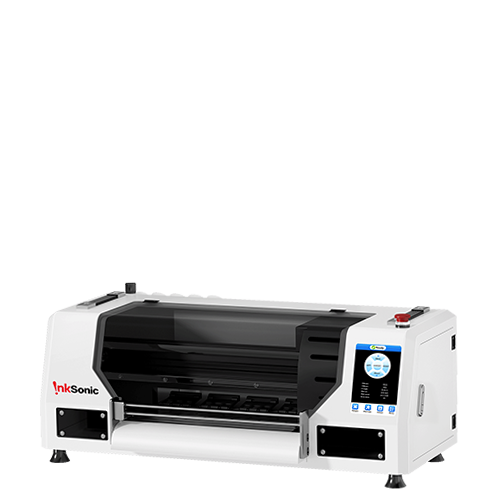









 A3 UV DTF-skrivare med stativ - VF13 [Pre-order]


